

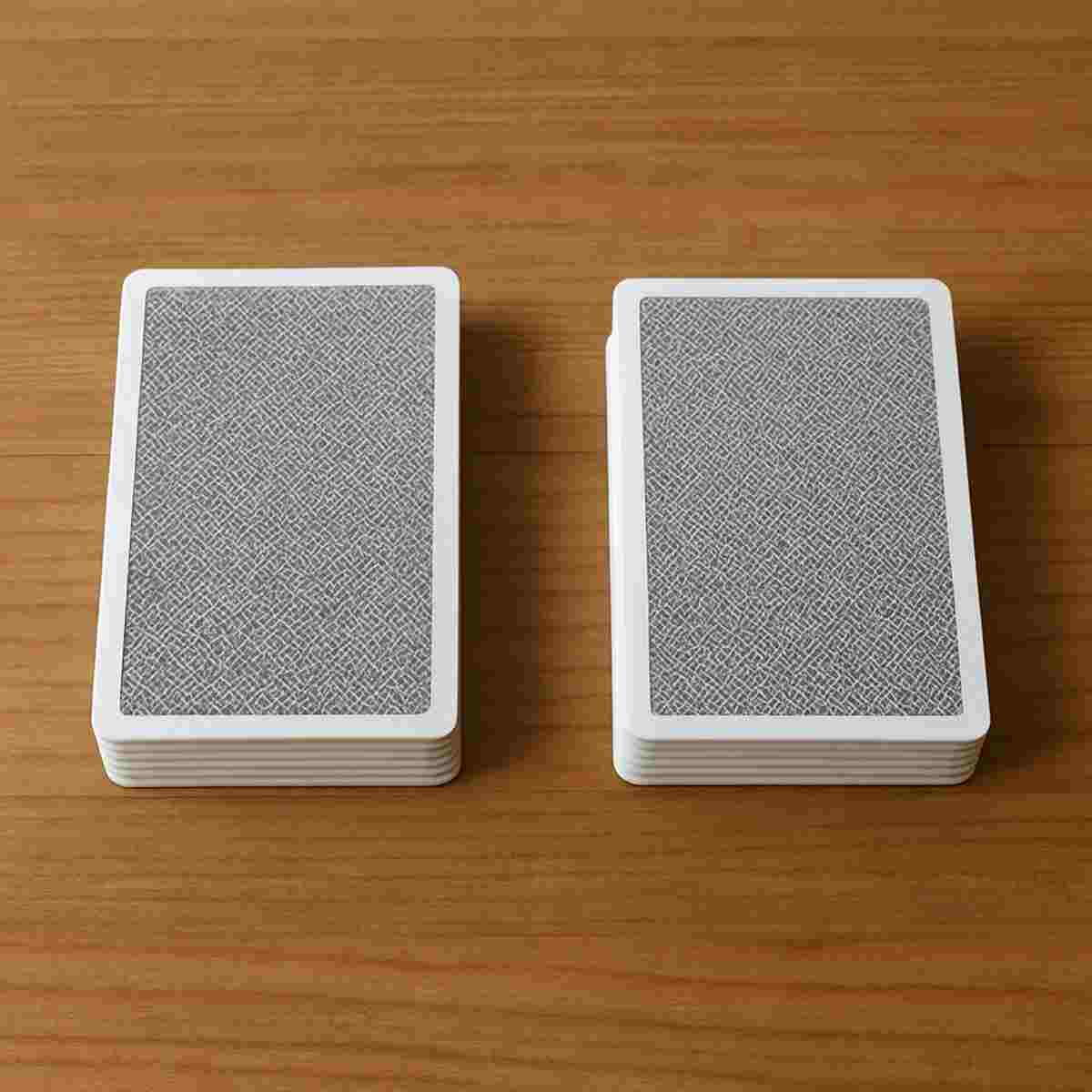
Ready to turn that standard deck of cards into a powerful math tool? The good news is you don’t need anything special—just that 52-card deck sitting in a drawer. How you set up this math card game begins just like the classic game of War you already know. Simply deal the entire deck face-down, splitting it evenly into two piles, one for each player. To learn more, check out gurutoto
Now for the only rule you need to decide on before you play: how to value the face cards. This choice is your first strategy, allowing you to tailor the game’s difficulty for your child. In practice, most parents use one of two simple systems:
- For Simplicity: All face cards (Jack, Queen, King) are worth 10. The Ace is worth 1.
- For a Challenge: Jack = 11, Queen = 12, and King = 13. The Ace is still 1.
That’s it. Once you’ve chosen your values and the cards are dealt, the game is officially set up. With a standard deck and this one simple rule decision, you are ready to start the multiplication battle and make practice feel like play.
How to Play: The Basic Rules of Multiplication War
The beauty of this math card game is its simplicity. If you know how to play classic War, you’re already halfway there. Instead of the highest card winning the round, the winner is determined by multiplication, turning a simple pastime into a fantastic tool for practicing multiplication facts without the boring drills.
Each turn is a quick, head-to-head challenge. The basic rules are straightforward, allowing you to start playing in minutes.
How a Round Works:
- Flip Your Cards. At the same time, both players flip the top card from their personal face-down piles.
- Multiply the Numbers. Look at the values of both cards. For example, imagine you flip an 8, and your child flips a 6.
- Call the Product. The first person to correctly call out the product—in this case, “48!”—wins the round. The product is simply the answer to the multiplication problem.
- Winner Takes the Cards. The winner of the round collects both cards and adds them to the bottom of their pile.
The game continues with this fast-paced, flip-and-multiply action. The overall goal is just like the original: keep playing rounds until one person has successfully collected all the cards in the deck.
Of course, the real excitement builds when you both flip cards of the same value or shout the answer at the same time. So, what happens in a tie? That’s when you get to have an exciting “math war” battle.
What Happens in a Tie? How to Win an Exciting ‘Math War’ Battle
Ties are where the real drama of Multiplication War unfolds. Whether you both shout the correct answer at the same moment or you each flip an identical card, the result is the same: it’s time for a “math war!” This high-stakes showdown is often the most memorable part of the game, turning a simple stalemate into a thrilling opportunity for one player to capture a huge pile of cards. It’s the perfect moment to raise the energy and build anticipation.
To begin the battle, each player places three cards from their pile face down on the table, like a countdown: one, two, three. Then, you both flip a fourth card face up. The multiplication challenge now happens with these two new cards. For example, if you flipped a 5 as your battle card and your child flipped a 7, the first one to correctly call out “35!” is the winner of the war.
The winner of this face-off doesn’t just win the two final cards—they collect the entire prize pot. This includes the original cards that started the tie, the six face-down “war” cards, and the two final cards, for a total of ten cards in one go! Capturing such a big stack is a game-changing moment. It’s this blend of high-stakes fun and constant repetition that makes the game more than just a pastime; it’s a powerful way to build math fluency fast.
More Than a Game: Why This Simple Game Builds Math Fluency Fast
While the laughter and high-fives are reason enough to play, Multiplication War is more than just a fun alternative to multiplication flash cards. The fast-paced, competitive nature of the game taps into the way our brains actually build strong, quick memories, making it a surprisingly effective learning tool. It’s not just practice; it’s smarter practice.
Think of it this way: when a child reviews a flashcard, they passively see the problem and the answer. In Multiplication War, they are forced to actively pull the answer from their memory, often under the slight pressure of the game. This mental act of retrieving information is what builds powerful, lasting memory pathways. Each time they correctly call out “56!” for an 8 and a 7, they are exercising that mental muscle, making the fact more automatic for the future.
The game also provides instant feedback in a uniquely low-pressure environment. If a player is unsure or calls out the wrong number, the correct answer is revealed naturally when the winner is declared. There’s no red pen, no sense of being graded—a mistake is just a lost card, not a moment of failure. This immediate, gentle correction is one of the key benefits of educational card games, as it removes the fear that often accompanies math practice.
Ultimately, this blend of active recall and stress-free correction is what helps build true math fluency. When practice feels like play, children are more willing to engage, their math anxiety lowers, and their confidence with numbers begins to soar. Of course, not every child is ready for the full challenge right away. For younger players or those just starting, a few simple tweaks can make all the difference.
Beginner’s Luck: How to Make the Game Easier for Younger Players
If your child is just dipping their toes into multiplication, a full-deck game can feel a little intimidating. That’s perfectly fine! The beauty of this multiplication card game is how easily you can adjust it for different skill levels. Instead of causing frustration, you can tailor the challenge to build their confidence one round at a time, making math fun for 3rd graders and other new learners.
For a smoother start, you don’t have to change the core rules at all—just the tools you use. These simple modifications can turn an overwhelming game into the perfect confidence-booster.
Three “Easy-Mode” Ideas:
- Shrink the Deck: Only use the cards from Ace (as 1) through 5. This limits the problems to the 1s, 2s, 3s, 4s, and 5s tables, allowing your child to master these foundational facts before moving on.
- Start with Addition: Play a few warm-up rounds of “Addition War.” Instead of multiplying the two flipped cards, you both add them. The highest sum wins. This gets them comfortable with the game’s flow.
- Keep a Times Table Chart Handy: Letting your child use a multiplication chart isn’t cheating—it’s smart practice! It removes the pressure of memory and allows them to focus on the process of finding the right answer.
Using a chart helps reinforce the correct answer without the stress of being “wrong.” Think of it less like an open-book test and more like using a cookbook while learning a new recipe. The goal is successful practice, not a pop quiz. Over time, you’ll notice them reaching for the chart less and less as the facts become second nature.
Once they’ve mastered the smaller deck and are shouting out answers with a smile, you’ll know they’re ready for the next step. For kids who have their basic facts down cold, you can introduce a few new rules to keep them on their toes.
The Next Level: 3 Challenging Variations for Older Kids
Once your child is confidently winning rounds and knows their times tables by heart, it’s time to raise the stakes. These multiplication war variations introduce new layers of thinking, perfect for older kids or anyone who loves a good challenge. By adding just one or two extra steps to the rules you already know, you can keep the game feeling fresh and ensure the learning never stops.
For a straightforward challenge, try the “Double-Flip Product.” In this version, each player flips over two cards instead of one. You multiply your own pair of cards together, and your opponent does the same. The player with the higher product—the answer from multiplying—wins all four cards. For example, if you flip a 7 and a 5 (product of 35) and your child flips an 8 and a 4 (product of 32), your 35 wins the round.
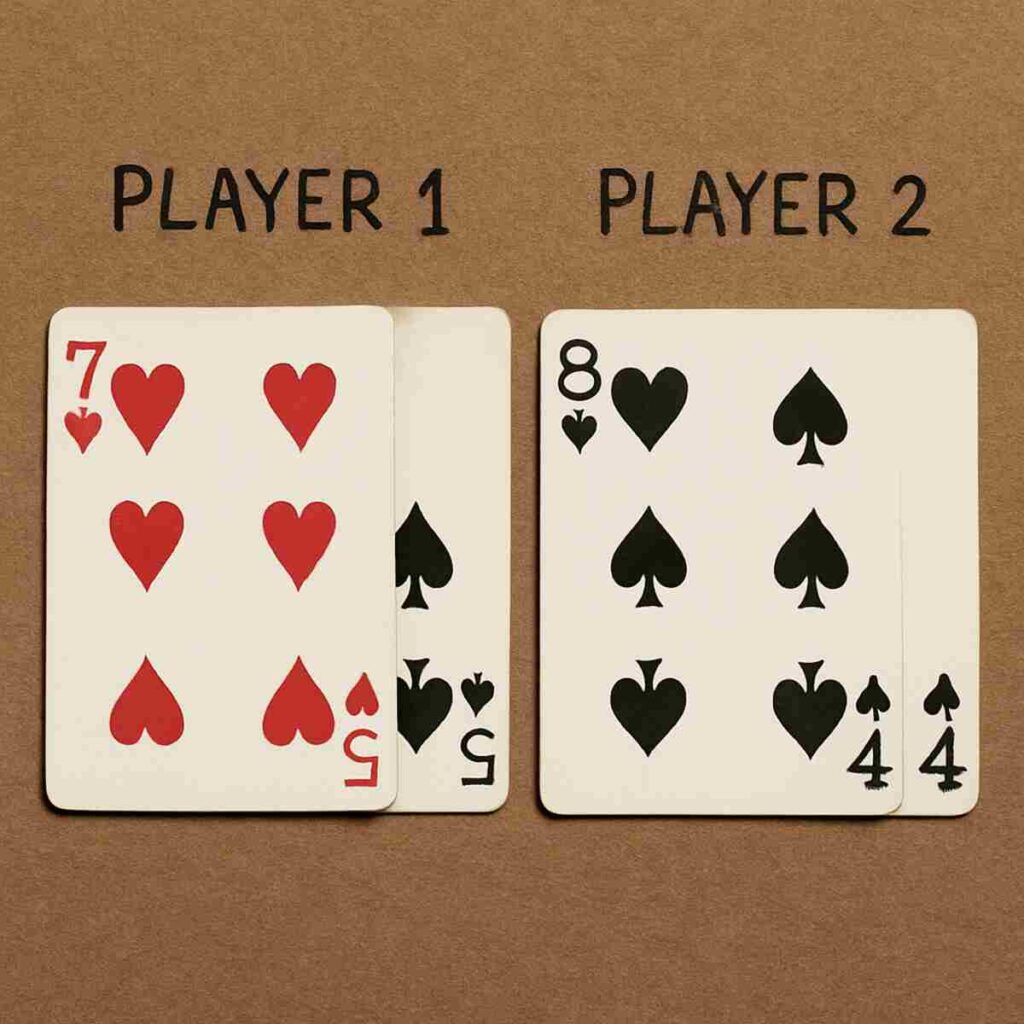
Ready to mix in another type of math? The “Three-Card” challenge adds a dose of quick addition. One player flips two cards and adds their values together to get a sum. The other player flips just one card. Then, you both race to multiply the first player’s sum by the second player’s single card. If you have a sum of 8 (from a 6 and a 2) and your opponent flips a 9, the problem is 8 x 9. First to shout “72” wins the hand!
To really stretch those math muscles, especially for middle schoolers, you can introduce negative numbers. Simply decide that all red cards are negatives and all black cards are positives. Now, a black 8 (that’s +8) played against a red 7 (that’s -7) results in a product of -56, practicing those tricky integer rules. These advanced two-player math card games show just how flexible this simple setup can be, adapting a multiplication card game for different skill levels. But what if you don’t have a deck of cards handy at all? Don’t worry, you can still get in on the fun.
No Playing Cards? How to Create a Perfect Game with Printables
Finding yourself without a deck of cards is no reason to stop the fun. In fact, it opens up an opportunity to create an even better learning tool. A quick online search for “printable multiplication cards for games” will yield dozens of free resources you can print and cut out in minutes. This simple step ensures you always have the materials for a quick game, turning any moment into a chance for practice.
Beyond just being a substitute, these printable cards offer a hidden advantage: they remove the confusion of face cards. For younger players just learning the rules, remembering that a Jack is 11 and a Queen is 12 adds an extra, unnecessary step. Using cards that simply show the numbers 1 through 12 (or higher) streamlines the game, allowing your child to focus completely on the math instead of the card’s rank. This makes for a smoother, faster-paced card game for learning multiplication facts.
The real power of a homemade deck, however, is the ability to customize it. Is your child breezing through their 2s and 5s but getting stuck on their 7s and 8s? Create a special deck loaded with 7s, 8s, and 9s. By tailoring the deck to focus on these trouble spots, you transform the game from general review into a powerful and targeted practice tool. It becomes one of the best alternatives to multiplication flash cards because the challenge is built right into the fun. And once you have a deck—whether it’s store-bought or custom-made—you can use it for far more than just War.
Beyond War: Two More Easy Math Card Games to Try With Any Deck
That same deck—whether store-bought or custom-made—is a portable toolkit for all sorts of math fluency games with cards. While Multiplication War is fantastic for drilling specific facts, other games encourage different kinds of thinking. One of the best is a creative calculation game often called “Target Number.” It shifts the goal from finding one right answer to discovering the many different paths you can take to get there, building mental flexibility right alongside math skills.
To play Target Number, simply deal four or five cards face-up. Then, declare a “target number”—20 is a great place to start. The first player to use the numbers on the cards with any combination of addition, subtraction, multiplication, or division to hit that target wins the round. For example, if the cards are 2, 4, 5, and 8, a player might shout “5 times 4 equals 20!” or “8 times 2, plus 4 equals 20!” It’s a fast-paced challenge that rewards quick, creative thinking.
If you’re looking for a quieter, more puzzle-like activity, try a variation of “Pyramid Solitaire.” Arrange cards face-up in an overlapping pyramid (one card at the top, then two below it, and so on). The goal is to remove pairs of uncovered cards that add up to a specific value, typically 10 or 13. Using a standard deck where Ace=1, Jack=11, Queen=12, and King=13, you could pair a Queen with an Ace, or a 10 with a 3. It’s a wonderful, low-pressure way to practice addition facts.
Having a few standard deck math games in your back pocket transforms math practice from a chore into a choice. Instead of asking, “Want to do flashcards?” you can ask, “Which game should we play today?” These fun alternatives to multiplication flash cards empower your child and give them a sense of ownership over their own learning.
Your Game Plan: Making Math Fun, Starting Tonight
The nightly battle over multiplication tables can officially end today. Where once you had to rely on dreaded flashcards or timed worksheets, you now have a simple, powerful tool in your back pocket. You are no longer just a parent or tutor enforcing practice; you are the fun-maker, ready to deal out a game so engaging that your child might not even notice they’re mastering their times tables.
You can go from reading this to playing your first round in under five minutes. Don’t overthink it—the goal is to have fun and connect. Here’s your immediate action plan to get started.
Your 5-Minute Action Plan
- Grab a deck of cards. Any standard deck will do.
- Sit down and explain the ‘Flip and Multiply’ rule from this guide.
- Play one quick round to 10 cards. See who wins!
This isn’t just about finding fun ways to practice times tables; it’s about transforming “math time” into “game time.” You aren’t just using one of the best math fluency games with cards; you are actively building your child’s confidence and showing them that learning can be a source of joy. By making math fun for 3rd graders—or any child in your life—you’re giving them a positive memory that will last long after the game is over.
