

Looking for a fun, fast-paced game for your next get-together? The horse race card game brings all the excitement of a day at the races to your living room table. It’s a game of pure chance, so no skill is needed—meaning anyone from kids to grandparents can jump in, place a bet, and have an equal shot at winning. To learn more, check out แทงมวย
At its heart, this is a simple card game with betting on horses, where each Ace from the deck becomes a contender in the race. Players bet on which horse they think will win, and the outcome unfolds one suspenseful card at a time. The shared groans and cheers as the horses advance make it a perfect icebreaker that guarantees a lively and engaging atmosphere for any group.
The best part is that you probably have everything you need already. To answer the question of what do you need for the horse race game, just gather these three items:
- A standard 52-card deck.
- Two or more players.
- Betting tokens (pennies, chips, or even candy work perfectly).
How to Set Up the “Race Track” in Under 60 Seconds
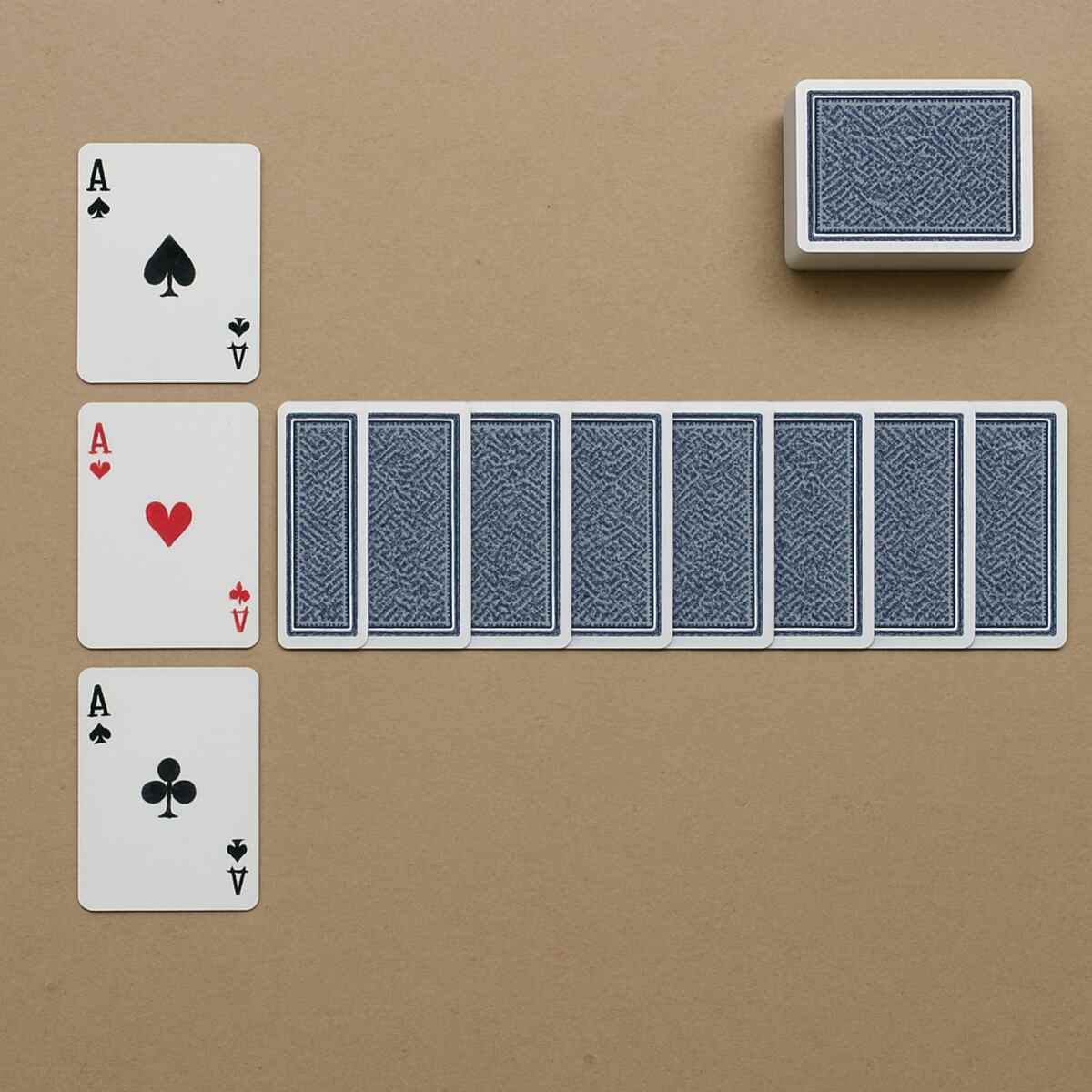
Getting your game ready is fast and simple. The first step in any horse race card game setup is to find your “horses.” Go through a standard 52-card deck and pull out all four Aces. Lay them face-up in a column on one side of your table, leaving space next to them. This column is your starting gate, with the Ace of Spades, Hearts, Diamonds, and Clubs all lined up and ready to run.
Now, take the rest of the deck and give it a good shuffle. To create the path the horses will follow, you’ll deal a row of cards face-down, running perpendicular to your column of Aces. This row is the “race track,” as shown in the photo. Each face-down card represents one step a horse must take to reach the finish line. Their suits and values don’t matter—they are simply placeholders for the track itself.
The number of cards you deal for the track determines the race length, giving you control over how to deal for the horse race card game. For a quick, fast-paced game that might only last a few minutes, use five to seven cards. If you want a longer, more suspenseful race with more twists and turns, we recommend using eight to ten cards. While some players use a printable horse race card game board, using cards for the track is the classic way to play anywhere, anytime.
With your horses at the starting gate and the race track laid out, the scene is set. Before you flip the first card to start the action, it’s time for the most exciting part before the race begins: placing your bets on which horse you think will win.
Placing Your Bets: A Simple Guide to Wagers and the Pot
With the track laid out, it’s time for some friendly wagering. Before the race begins, each player chooses the horse (the Ace) they believe will win and places a bet on it. For your first few games, we recommend everyone bets the same simple amount—one poker chip, one penny, or one of whatever token you’re using. If you think the Ace of Diamonds has what it takes, you’ll simply place your chip directly on that card at the starting gate. This is the core of horse race card game betting; you’re backing your favorite to win.
After everyone has placed their bet on an Ace, the dealer collects all the chips and places them in a single pile in the middle of the table. This central pile is called the “pot.” Think of it as the grand prize for the race. The entire goal is to be one of the lucky people who backed the winning horse, because whoever does gets to claim what’s in that pot.
One of the best parts of this game is that multiple people can bet on the same horse. If you and two friends all think the Ace of Spades looks fast, you can all place your bets on it. This creates fun team-like dynamics and answers the question of how do you win the horse race card game: if your horse wins, everyone who bet on it splits the pot equally. If you were the only one to bet on the winner, you get the whole thing! Now that all bets are in and the pot is ready, let’s start the race.
And They’re Off! How to Run the Race, Step-by-Step
The excitement begins as the dealer picks up the remaining shuffled cards, which form the “race deck.” To start the race, they simply flip the top card from this deck face-up for everyone to see. This single action is the core of the entire game, and each new card builds suspense.
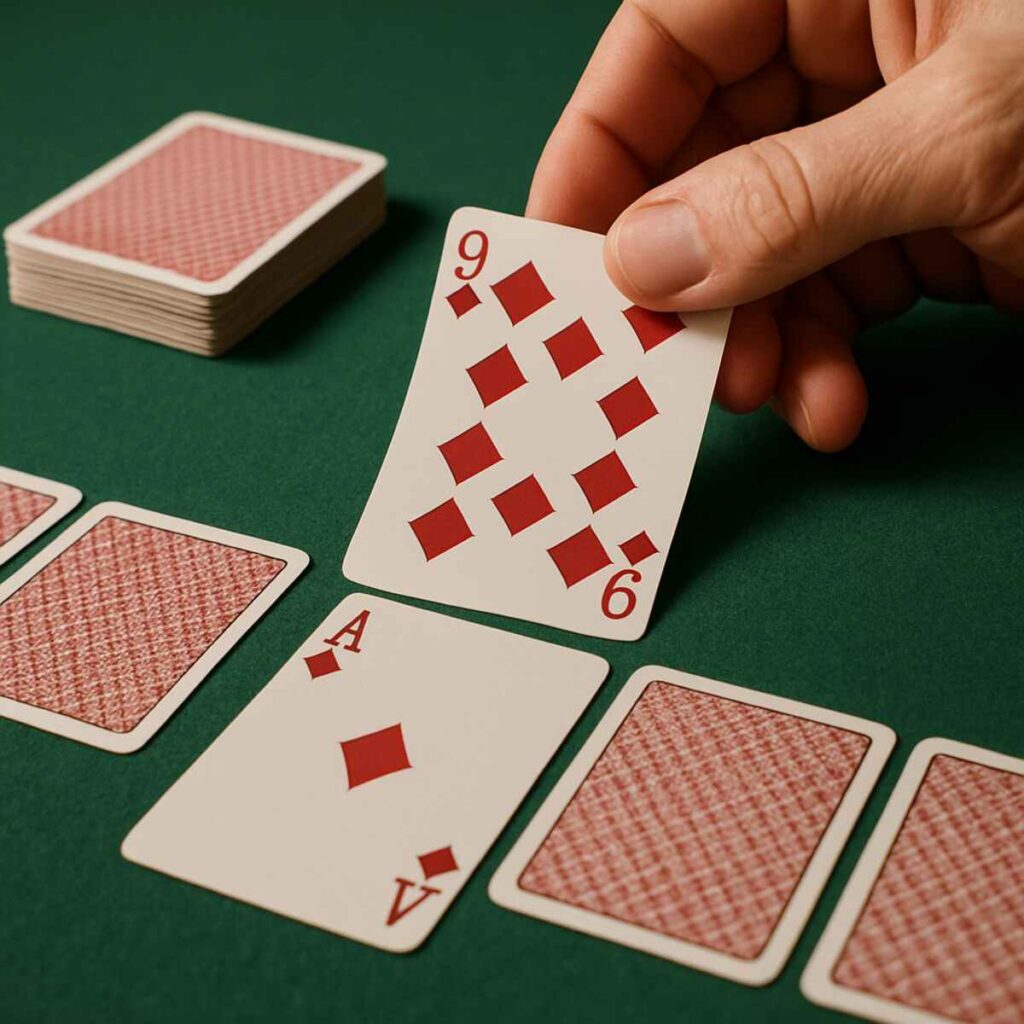
So, which horse moves? The answer is in the card’s suit. The number or face of the flipped card doesn’t matter at all—only whether it’s a Heart, Diamond, Club, or Spade. For example, if the dealer reveals the 9 of Diamonds, the Ace of Diamonds moves forward one space. The horse advances from the starting line to the position directly under the first face-down card of the race track.
After a horse moves, the dealer sets the flipped card aside and immediately turns over the next one from the race deck. A new card means another horse takes a step forward. This process is how to play horse race with cards: a quick, repeating cycle of flipping and moving that creates a thrilling, unpredictable race. The Aces advance down the track until one finally breaks away from the pack. But what does it take to actually win?
Crossing the Finish Line: How a Horse Wins the Race
A horse wins by being the first one to completely clear the track. The “finish line” isn’t the last face-down card; it’s the empty space just beyond it. This is a key part of how you win the horse race card game. For example, if your race track has eight cards laid out, a horse must be moved a total of nine times to be declared the winner. As shown in the image, the Ace of Spades has moved past the final track card, clinching the victory while the other horses are still on the course.
The moment one horse makes that final move and crosses the finish line, the race is instantly over. You should stop flipping cards from the race deck immediately—a champion has been crowned! There are no ties for first place in this game; the first horse to make it across is the undisputed winner. All other horses lose, no matter how close they were.
A common question that comes up is, “What happens if a horse has already won, but you flip another card of its suit?” The answer is simple: nothing at all. Any card that is flipped for a horse that has already finished the race is simply ignored. You just set it aside and flip the next card from the deck to continue the action for the remaining horses if you’re playing for second or third place payouts (in more advanced versions). But for now, with a clear winner, it’s time to figure out who gets the prize money.
Claiming Your Prize: How Payouts Work for the Winners
With a winning horse officially declared, it’s time to distribute the winnings from the pot. The horse race card game payout is straightforward: everyone who placed a bet on the winning horse gets to split the pot evenly. If you were the only person clever enough to back the right horse, you get to scoop up all the chips or money for yourself! For instance, if the pot has 20 chips and four people bet on the winning horse, each person would receive five chips. It’s a simple division problem where the lucky bettors share the prize.
But what happens when a longshot horse wins and nobody placed a bet on it? In this common scenario, no one wins the pot. Instead, all the bets stay right where they are for the next round. This is often called a “roll over” or a “scratch,” and it adds a huge layer of excitement to the game. The pot for the next race will be much bigger, as new bets will be added on top of the old ones. Winning a roll-over pot is a major victory and can change the course of the evening.
The scoring for the horse race card game is designed to be fast and create suspense. You either have a group of happy winners sharing the prize, or the stakes get higher for the next race. This simple system keeps the game moving without needing a calculator or a complex payout chart. Now that you know how to win and get paid, you might be wondering about some other common situations, like what to do if you run out of cards before a horse can finish the race.
Quick Fixes: Answering the 3 Most Common Rule Questions
As you start your first few races, you’ll inevitably run into a few tricky situations. Don’t worry—they all have simple solutions that will keep the fun going without any arguments or confusion.
The most frequent question is: “What happens if we run out of cards to flip?” If your draw deck is empty and no horse has won yet, simply scoop up the entire discard pile. Give it a good shuffle, place it face down, and you have a brand-new draw deck to continue the race. On a related note, those face-down cards that make up the race track itself are just markers. Their suits and numbers have no effect on the game, so you can ignore them completely.
Deciding on the length of the track can feel arbitrary, but it’s the best way to control the game’s pace. For a faster game, especially with fewer players, a track of 6 to 8 cards is perfect. If you want to build more suspense or are hosting a horse race card game for large groups, a longer track of 10 or even 12 cards creates more drama and makes victory feel even more rewarding.
With these common hiccups solved, you’re now equipped to run a smooth race every time. Once you and your friends feel like you have the hang of it, you might be ready to spice things up a bit.
Spice Up Your Race Night: 3 Fun Variations to Try
Once you’ve run a few races, you might feel ready to add a new layer of excitement. These popular horse race card game variations are incredibly easy to learn and can turn a simple game into a memorable event. You can mix and match them or just pick the one that best suits your group’s style for the night.
- The Drinking Game Rule: Looking for simple horse race drinking game rules? Here’s the easiest one. Before the race, everyone agrees on a “loser’s drink.” When the race is over, anyone who placed a bet on a horse that didn’t win takes a drink. It’s a fun, low-stakes way to get everyone invested in every horse’s movement.
- The ‘Scratched’ Horse: To add some pre-race suspense, try this rule. After all bets are placed but before the race begins, the dealer flips over the first face-down card of the racetrack. The suit of that card indicates which horse is “scratched”—it’s out of the race and cannot win. Any bets placed on that horse are forfeited and remain in the pot, instantly raising the stakes for the remaining runners.
- The Auction: Handling betting for a horse race card game for large groups can get chaotic. If you have eight or more players, things can get messy with everyone trying to bet on just four horses. Instead of individual bets, try holding an auction. The dealer auctions off each horse (Ace) to the highest bidder. All the money from the auction goes into the pot, and the person who “owns” the winning horse at the end of the race wins it all. This keeps the betting clean and gives each horse a dedicated champion.
Feel free to use these variations as a starting point. The best part of the Horse Race game is its flexibility, so don’t be afraid to experiment and create house rules that make your game night unforgettable.
You’re Ready to Host Your First Race!
You’re now ready to turn a standard deck of cards into an evening of excitement. You’re not just a player; you’re equipped to be the host, confidently teaching the game to friends and family from scratch.
It all boils down to three simple phases: set up your four Aces and the racetrack, have everyone place their bets, and start flipping cards to cheer your horses toward the finish line. Because everyone has an equal chance to win, it’s one of the most engaging card games for any group.
You no longer just see a deck of cards; you see a racetrack in a box, ready for cheers and friendly competition. So grab that deck, call over some friends, and get the race started. The fun begins with the very first flip.
