

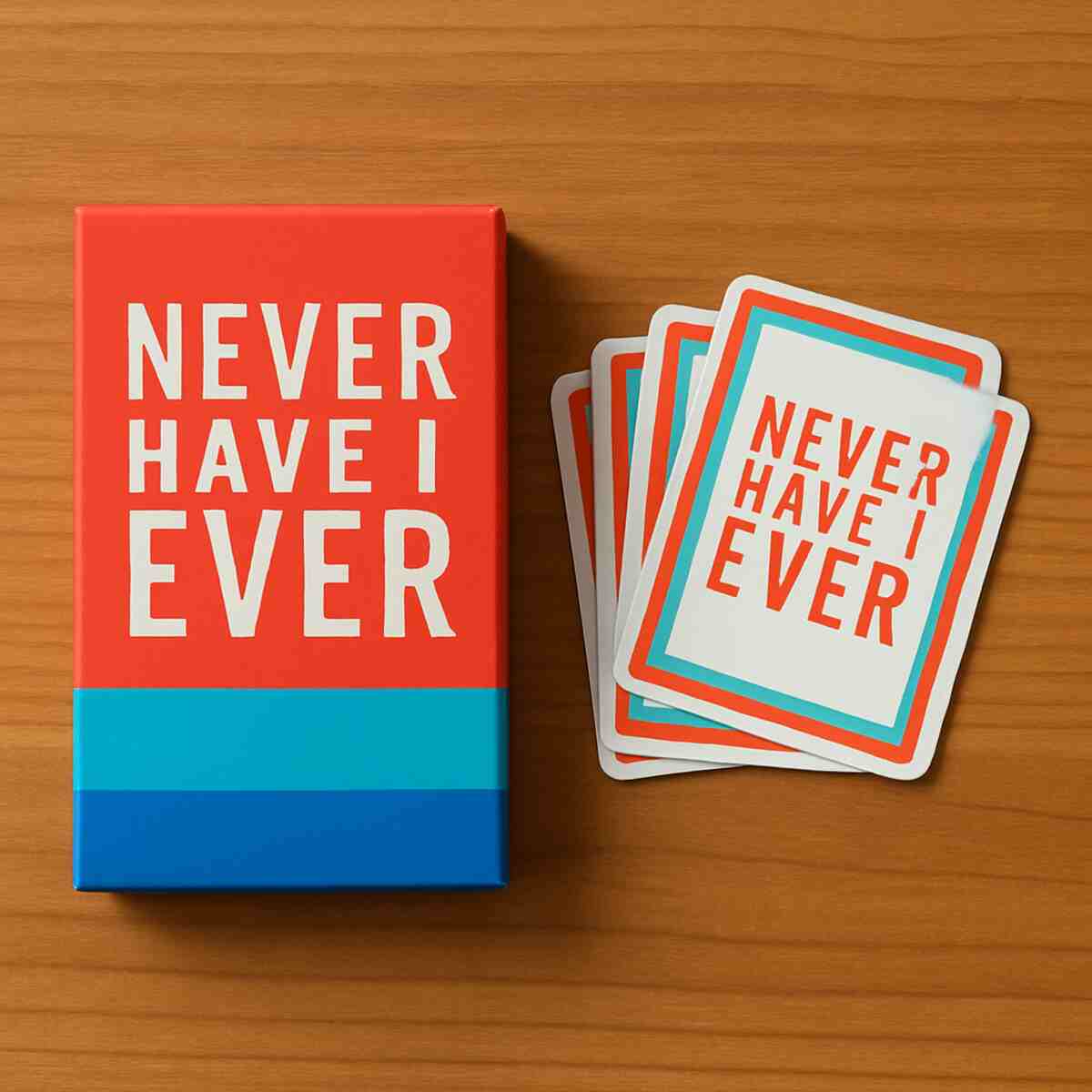
Ready to play Never Have I Ever, but tired of thinking up your own questions? The card game version makes it fast, fun, and full of surprises. While it shares the same spirit as the classic “ten fingers” party game, there’s one crucial difference that changes everything: this time, there’s a clear winner and loser. The simple rules that follow will get your game started in under two minutes. To learn more, check out KAPTEN189
Before you play, you need to know how you win the Never Have I Ever game: by avoiding cards. Think of the cards as “confession points.” Every time you’ve done the action on a card, you have to keep it, creating a simple Never Have I Ever scoring system. The main goal is to finish the game with the fewest cards in your personal collection, proving you’re the group’s most innocent… or at least, the most secretive.
The game has a clear endpoint, which is triggered when the first person collects a set number of cards, usually ten. That person “loses” the game. In practice, this is where the fun really begins. Many groups decide that the loser must perform a funny dare, refill the snacks, or simply wear a silly hat for the next round. These low-stakes Never Have I Ever rules ensure the game is more about laughs than a strict victory.
What You Need to Play: The 60-Second Setup
You can skip the complicated rulebooks. Setting up Never Have I Ever is incredibly fast, making it one of the best party card games for groups. There’s no board, no score sheets, and no dealing required. You just need three things to get started:
- A Never Have I Ever card deck.
- 3 or more players (the game gets better with a bigger group!).
- A space where everyone can sit comfortably.
Once you’re gathered, just give the stack of cards a good shuffle and place it face down in the centre of the group to form the Deck. Decide who will go first—it can be the person whose birthday is next, or simply whoever is most eager to start! With your deck in the middle, you’re all set to begin.
How to Play Your Turn: A Step-by-Step Walkthrough
The game moves quickly because a turn is incredibly straightforward. Once you’ve decided who goes first, that player kicks things off. The core of the game is a simple loop of drawing a card, reading it to the group, and seeing who has to fess up.
On your turn, you are the “Reader,” and your job is easy. Here’s exactly what happens:
- Draw a Card: Take the top card from the deck in the middle.
- Read it Aloud: Read the entire “Never have I ever…” statement out loud so everyone can hear it clearly.
- Confess or Stay Quiet: This is the moment of truth. Anyone in the group (including the Reader!) who HAS done the action described on the card must admit it. The consequence? You have to keep the card and place it in front of you. If you have NOT done the action, you do nothing.
This simple process is the heart of the game. If you’re “innocent” and haven’t done the action, you don’t collect a card—which is exactly what you want! If nobody kept the card, it is placed face-up into a new stack to form the Discard Pile. The turn is now over, and play continues to the person on the left.
While most turns follow this simple draw-and-confess pattern, some decks will throw you a curveball. Now and then, you might draw a card that looks different and gives an instruction to the whole group. These are often called “Rule Cards,” and they change the game in hilarious ways.
What Happens If You Draw a “Rule Card”?
Think of a Rule Card as a temporary chaos-maker. Unlike a regular “Play Card” that just targets the people who have done a specific action, a Rule Card puts an instruction on the entire group. Instead of a confession, it sets a new, silly condition for the game. For example, a Rule Card might declare, “Everyone must talk in a pirate accent,” or “You can no longer say the word ‘yes’.” These rules apply to everyone, including the person who drew the card.
The new rule immediately goes into effect and stays active until someone draws another Rule Card. When a new Rule Card is drawn and read aloud, its rule instantly replaces the old one. So, if you’ve been struggling to avoid pointing for five rounds, you’ll be saved the moment someone draws a new card that forces everyone to meow instead. This mechanic ensures the game is constantly changing and no one gets too comfortable.
Ultimately, these cards are what make many official never have I ever card set versions so memorable. They’re a big reason it’s considered one of the most fun party card games, as they add a layer of hilarious, unpredictable performance. The best never have I ever game variations often come from these rules, forcing players to do more than just confess their past deeds. For many groups, these rules are just for fun, but some players like to attach a penalty for breaking them, especially when turning it into a drinking game.
The Drinking Game Version: Rules for Adult Parties
For groups looking to add an adult twist, adapting Never Have I Ever into a drinking game is incredibly simple. The core rule change is this: instead of collecting a “Play Card” when you confess to doing an action, you take a drink. The goal shifts from avoiding cards to simply sharing stories and enjoying the evening. This single tweak transforms the game from a points-based challenge into one of the most popular adult party games because it focuses entirely on the social experience rather than a “winner” or “loser.”
A common house rule adds another layer of engagement. What happens if the card is read and no one has done the action? In this scenario, many groups declare a “social,” where everyone in the circle takes a drink together. This keeps the game moving and ensures there are no dud rounds where nothing happens. Following these simple never have I ever drinking game instructions makes for one of the most fun card games for groups looking for a lively night.
The most important rule when playing any drinking game is to be responsible. Encourage players to use small sips, and always have water available. The aim is to keep the fun going all night, so be sure everyone knows their limits and feels comfortable participating. After all, the best part of the game isn’t the penalty, but the hilarious stories and surprising connections you make along the way.
How to Play with Family: Making It Fun for All Ages
While the drinking game version is popular, Never Have I Ever can also be a fantastic game for family gatherings with a few simple tweaks. The single most important step is to moderate the deck beforehand. Before you play, take five minutes to go through the cards and pull out any prompts that are too mature or might lead to awkward conversations. Creating a curated, family-safe deck ensures that everyone from grandparents to grandkids can participate comfortably. This simple act turns the non-drinking version of never have i ever from a potential minefield into a source of guaranteed fun.
With an age-appropriate deck ready, the next step is to change the goal of the game. Instead of focusing on a “loser” who collects too many cards, you can flip the script. The person with the fewest cards at the end can be declared the winner! Another one of the best family-friendly never have I ever ideas is to replace the penalty of keeping a card with a fun, silly action. For example, if you’ve done the action on the card, you might have to do a silly dance for five seconds or share a one-sentence story about the experience.
These simple shifts completely change the game’s atmosphere. The focus moves away from embarrassing confessions and toward lighthearted storytelling and shared laughter. It becomes less about what you have done and more about learning surprising new things about your family members positively. By emphasizing fun and connection, it transforms into an excellent icebreaker game with question cards for any family event. The best way to control the content is to create the prompts yourself.
No Deck? No Problem: How to Create Your Own DIY Cards
Don’t have an official deck on hand? Making one is half the fun and costs practically nothing. By creating your own prompts, you can perfectly tailor the game to your group’s sense of humour. Getting started with making your own never have I ever deck is as easy as grabbing some paper.
- Get the Supplies: Grab a stack of index cards or simply tear a few sheets of paper into equal-sized slips. You’ll want at least 10 cards per player.
- Write the Prompts: Have each player anonymously write 5-10 “Never have I ever…” statements on separate cards. This ensures everyone contributes and the prompts stay a surprise.
- Shuffle and Play: Collect all the cards, give them a good shuffle, and place the stack in the middle. You’ve just created a unique deck.
The best part about this method is that the game instantly becomes more personal and engaging. Wondering what good prompts are for Never Have I Ever? Encourage players to think about common experiences, like “Never have I ever… re-gifted a present” or “…eaten cold pizza for breakfast.” If you’re playing with a group of adults and want spicier questions, you can even search for lists of printable never have I ever cards for adults online and write those down.
To take your custom game to the next level, try adding a few of your own “Rule Cards.” These are special cards that introduce a funny, temporary rule for the whole group. The real magic happens when you base them on inside jokes. For example, a Rule Card might say, “Everyone must end their sentences with ‘…or so the prophecy says'” or “No one is allowed to laugh for the next round.” This level of personalization is what can make a homemade deck even more memorable than a store-bought one.
3 Fun Game Variations to Keep Things Fresh
Once you’ve mastered the basics, you can easily spice things up with a few simple rule changes. For a game that’s more about connection than just confessions, try adding the “Story Time” rule. With this popular variation, anyone who has done the action on the card must also share the brief, funny, or embarrassing story behind it. Suddenly, “Never have I ever… gotten a terrible haircut” becomes a hilarious trip down memory lane for the whole group.
To flip the game on its head, play a round of “Reverse Never Have I Ever.” Here, the card reader silently decides if they have done the action, without telling anyone. The other players then guess whether the reader is a “Have” or a “Have Not.” Anyone who guesses incorrectly is the one who collects a card. This is one of the best house rules for Never Have I Ever when you want to see how well you really know your friends, turning the game into a fun bluffing challenge.

If your group thrives on friendly competition, introduce a simple point-based scoring system. Instead of collecting cards, each “I have” confession earns that player one point. You can play for a set amount of time or until the deck runs out, and the player with the lowest score at the end is crowned the winner. This method is perfect for turning one of the most classic, fun party card games into a more structured and competitive match.
These never have i ever game variations show just how adaptable the game is, allowing you to tailor the experience to your group’s specific vibe—whether that’s deep storytelling, strategic guessing, or a race to the finish line.
Never Have I Ever vs. Most Likely To: Which Is Right for Your Group?
While Never Have I Ever is all about looking back at what you’ve done, the game Most Likely To is about looking around at who your friends are. The game’s core mechanic is simple: a card is drawn with a prompt like, “Most likely to survive a zombie apocalypse,” and everyone votes on which person in the room best fits that description. The key distinction in the never have I ever vs most likely to debate is self-confession versus group judgment. One is about your history; the other is about how your friends perceive you right now.
Because of this, each game shines in different social settings. Never Have I Ever works as a fantastic icebreaker game with question cards, as it helps new friends or acquaintances find common ground by sharing past experiences. It’s a low-pressure way to get to know people. In contrast, Most Likely To lands best with a group that already shares history and inside jokes. The humour comes from knowing your friends well enough to argue passionately about who is, in fact, “most likely to cry during a phone commercial.”
So, if your goal is discovery and storytelling, stick with Never Have I Ever. If you’re ready to put your friendships to a hilarious test of perception, Most Likely To is your game. Both are some of the most fun party card games for groups you can play, each offering a unique brand of laughter.
Your Quick-Reference Rules Summary to Start Playing Now
To get your game started quickly, here is a simple never have I ever rules summary to keep things moving smoothly.
How to Play Never Have I Ever: Rules in a Nutshell
- Goal: Avoid collecting cards. The first person to collect 10 cards loses.
- Your Turn: Draw a card and read the prompt out loud to the group.
- Confess: If you’ve done the action on the card, you must keep it. If not, you do nothing.
- Rule Cards: If you draw a special Rule Card, its new rule applies to everyone until the next one appears.
Remember the most important rule: have fun. The tone you set with the first few cards will define the rest of the game, so start with light, funny prompts to get everyone comfortable. With these rules, you’re ready to turn a deck of cards into an evening of hilarious stories. All that’s left is to shuffle the deck and start your first round.
