

Just opened the box for The Mind and feeling a little lost? Don’t worry. This guide will get you and your friends playing your first game in under five minutes, no confusing rulebook needed. We’ll show you how to play The Mind game for beginners by focusing on what really matters: getting started and having fun. To learn more, check out https://www.hret-hen.org/
Imagine a card game where your entire group is on one team, but there’s a catch: you can’t talk. At all. No gestures, no winks, no kicking anyone under the table. The goal is to play your cards in perfect ascending order together, using nothing but a shared sense of timing. In practice, this silent cooperation is what makes the game so rewarding and surprisingly easy to pick up.
What Is the Object of The Mind? Your Only Goal
Unlike most card games where you’re trying to beat your friends, The Mind has one simple objective: work as a team to play all the cards from everyone’s hands into a single pile, in ascending order. From the lowest number to the highest, you are trying to create a perfect sequence together. In this uniquely cooperative card game, you don’t have individual turns; you win or lose as one unit.
Your shared challenge grows over a series of “Levels.” Completing a level in The Mind is straightforward: for Level 1, each player gets one card. If your team succeeds, you advance to Level 2, where everyone gets two cards, and so on. Your ultimate goal is to conquer all the required levels for your player count.
How to Set Up Your First Game of The Mind in 60 Seconds
Getting your first game of The Mind on the table is incredibly fast. First, shuffle the deck of cards numbered 1-100 and place it face-down to form a draw pile. Since you’re starting on Level 1, deal one card face down to every player. No one should look at their card yet! The remaining cards won’t be used in this level, so just set them aside for now.
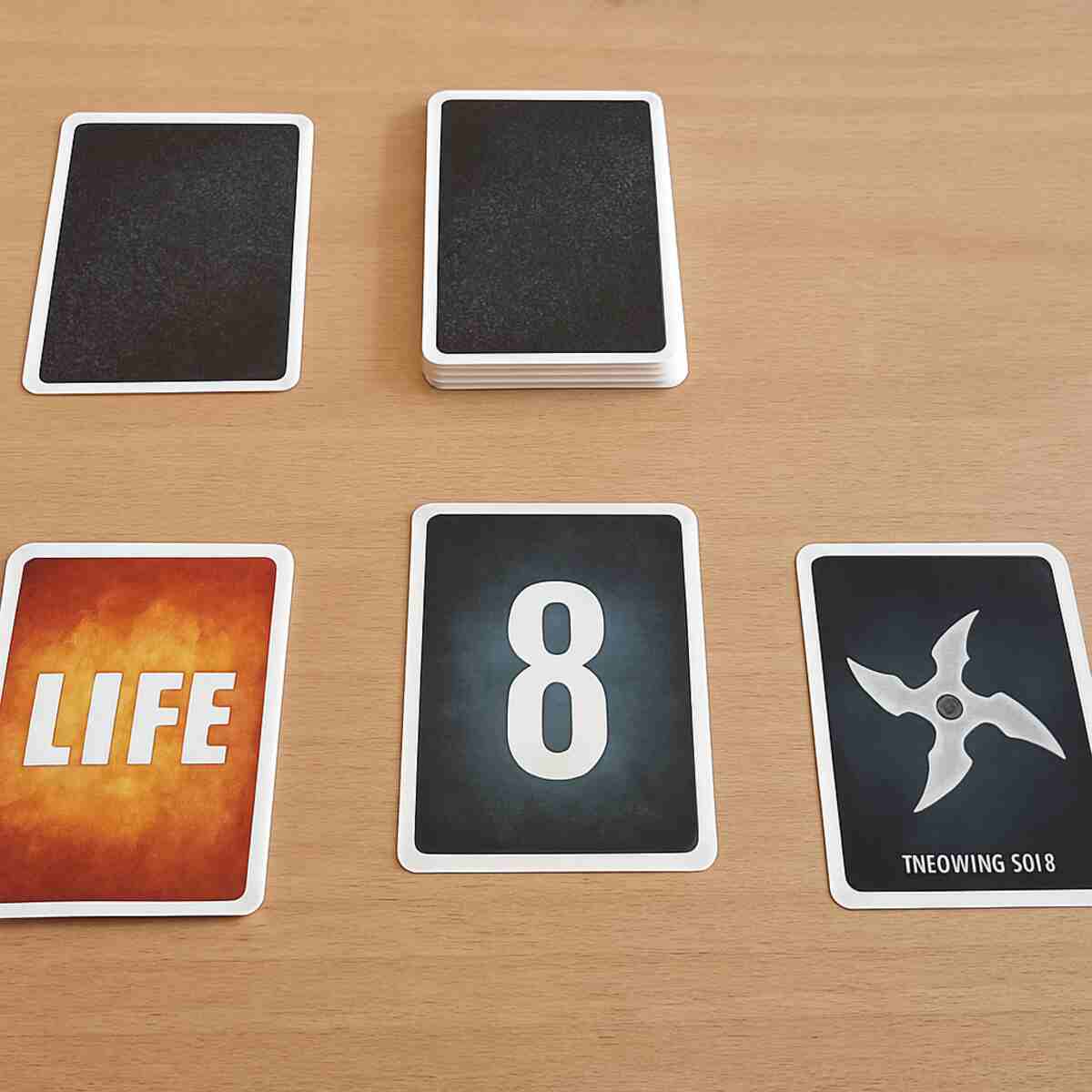
Before you begin, your team gets a couple of tools to help you on your journey: Life cards and Throwing Star cards. Think of Life cards as your team’s “mistakes.” You’ll lose one whenever a card is played out of order. Throwing Star cards are a rare, powerful tool your team can use to get out of a tough spot. Place your starting Lives and Throwing Stars face-up on the table where everyone can see them.
The number of Lives, Stars, and the final Level you need to beat depends on your player count. This quick guide to The Mind game levels shows what you start with and what your goal is. For example, playing The Mind with 2 players gives you two lives and one star, and you must beat Level 12 to win.
| Players | Starting Lives | Starting Throwing Stars | Goal: Beat Level | | :— | :—: | :—: | :—: | | 2 | 2 | 1 | 12 | | 3 | 3 | 1 | 10 | | 4 | 4 | 1 | 8 |
Your setup should now look something like this, ready for your first attempt at Level 1.
With your cards dealt and your Lives on the line, it’s time to learn the most important—and strangest—rule of the game.
The #1 Rule: How Do You Play a Card Game Without Talking?
The most important of all the mind card game rules is that you absolutely cannot communicate. No talking, no winking, no kicking each other under the table. So, can you communicate in The Mind Game at all? No. Instead, you have to develop a shared sense of time with your teammates. Think of it like everyone starting an internal stopwatch at the same moment. The goal is to play all the cards from your hands into a single pile on the table, from lowest to highest number.
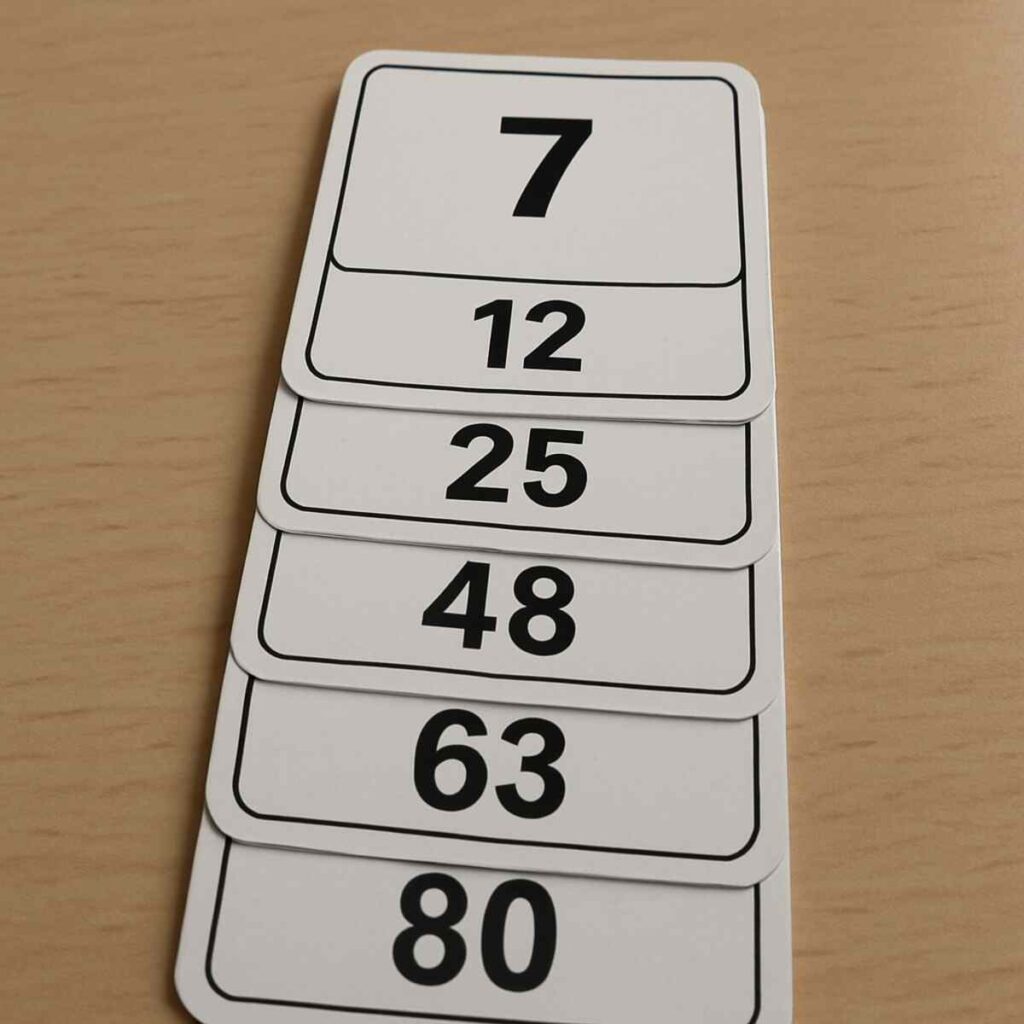
This “internal clock” is your guide for how to play The Mind game for beginners. A low number, like a 5, should feel very “urgent,” and you should only wait a few seconds before feeling the need to play it. A high number, like an 80, should feel very “patient,” meaning you’ll need to wait a long time before its turn. If you have the card 12, you’ll naturally feel the urge to play it much, much sooner than the person holding a 65.
To ensure everyone’s clock starts at the same time, the game has a simple starting ritual. Once everyone is ready with their card, you all place one hand flat on the table to focus. When the team feels ready, you collectively lift your hands off the table. This is the silent “Go!” signal. The level has begun, the clock is ticking, and players can now play their cards whenever they feel the moment is right.
“Oops! I Played Out of Order!” — How Life Cards Work
It’s bound to happen: you confidently play your ’50’ card, only to see a teammate cringe because they were holding a ’42’. This is one of the most common mistakes in The Mind game, and the penalty is simple: your team loses one Life. Think of your shared Life cards, which you set out during setup, as your team’s ‘chances.’ When a mistake like this occurs, one Life card is immediately discarded.
When this happens, play pauses immediately. Any players holding cards with numbers lower than the card that was mistakenly played must set their cards aside, face up. So, the player with the ’42’ would reveal their card and place it in the discard pile along with any other “missed” cards from other players. This clears out the error, and once everyone is ready again, the game continues right where you left off.
Losing a Life brings your team one step closer to defeat. This is fundamentally how Life cards work in The Mind: if you are forced to discard your very last Life card, the game is immediately over, and the team loses. These are the stakes in the game, making every decision important. Successfully clearing all the cards from your hands is how you win the level, which is a much more satisfying outcome.
You Did It! How to Complete a Level and Prepare for the Next
The moment the last card hits the table and everyone realizes you did it—that’s the magic of The Mind. You have completed a level when all players have played all the cards from their hands, and the stack in the middle forms a perfect, ascending sequence. There’s a shared sigh of relief, and your team has earned the right to face a greater challenge.
Beyond the satisfaction of winning, the game also rewards your team with helpful tools as you conquer certain levels. These rewards help you survive the increasingly difficult later rounds. Add any bonus you earn to your team’s supply. The reward schedule is as follows:
- Beat Level 2: Gain 1 Throwing Star
- Beat Level 3: Gain 1 Life
- Beat Level 5: Gain 1 Throwing Star
- Beat Level 6: Gain 1 Life
- Beat Level 8: Gain 1 Throwing Star
- Beat Level 9: Gain 1 Life
Once you’ve collected any rewards, it’s time to tackle the next challenge. Simply gather all 100 cards, give them a good shuffle, and deal for the new level. If you just beat Level 3, for instance, everyone will now receive 4 cards for Level 4. The number of cards increases, but so does your team’s silent connection.
Stuck? How to Use a Throwing Star Card to Save Your Team
Sometimes, the game will grind to a halt. You might be holding a mid-range card like 45, another player is hesitating, and no one is confident they have the lowest number. This is the exact moment a Throwing Star can save you. Using a Throwing Star allows every player on the team to discard the single lowest card from their hand, placing it face-up on the table. This clears out a chunk of low numbers, gives everyone more information, and helps get the game flowing again. This simple tool is one of the most important parts of the Mind card game rules, as it can prevent a costly mistake.
You can’t just decide to use a star on your own—that would break the “no talking” rule. Instead, any player who feels the team is stuck can suggest using a star by raising their hand. This is a silent proposal to the group: “I think we should use a Throwing Star. Do you all agree?” It’s not an order, just an offer. Once a hand is raised, the game pauses as the team makes a collective decision.
For the Throwing Star to be used, the decision must be unanimous. If you agree with the proposal, you also raise your hand. Only when every single player has a hand raised does the team spend the star and discard their lowest cards. However, if even one player feels it’s not the right time and keeps their hand down, the proposal is denied. The players who raised their hands put them back down, the star is not spent, and the tense silence of the game resumes. This adds a layer of group strategy, making it a powerful but risky move.
The Finish Line: How to Win (or Lose) The Whole Game
The path to defeat is straightforward: running out of lives. Each time a card is played out of order, your team must discard one of its precious Life cards. If a mistake costs you your very last life, the game ends immediately. The team has lost, and it’s time to shuffle up, take a deep breath, and try to sync your minds again.
Winning, however, is a much more satisfying path. To achieve victory, your team must complete a set number of levels, which changes based on your player count. With two players, your goal is to beat Level 12. For three players, it’s Level 10, and for four players, it’s Level 8. Successfully play every card in order during that final round, and your entire team has conquered The Mind.
Ultimately, every game boils down to that simple race: can you beat all the levels before you run out of lives? Knowing the finish line is one thing, but getting there takes practice.
Beyond the Rules: A Simple Strategy for Beating the First 3 Levels
Knowing the rules is one thing, but feeling the timing is another. To get your group in sync, try this simple mental counting strategy. When a level begins, everyone should silently start counting in their head at a steady pace: “one… two… three…” and so on. If you’re holding the card ‘8’, you should feel the urge to play it around the 8-second mark. This “one-second-per-number” rhythm creates a shared timeline, turning a wild guess into a calculated risk and providing one of the most effective strategies for winning The Mind.
This mental clock is not foolproof. What happens if you have the ’30’ but are nervous someone has a ’29’? One of the most common mistakes in the Mind game is waiting too long. If you hesitate and another player drops a ’32’, you’ve already failed the sequence. It’s often better to risk playing slightly too early. A quick mistake costs one life, but a long hesitation can disrupt the entire team’s rhythm, causing a cascade of errors. Don’t be afraid to trust your gut and play the card.
Beyond simply counting, the best strategy involves paying close attention to your teammates. The game is silent, but it isn’t signal-proof. If you see a player reach their hand toward the center and then quickly pull back, that’s a powerful piece of information. It likely means they have a card that is very close to the one they were about to play. Learning to read this body language is a fundamental skill for how to play The Mind for beginners. This shared focus is especially important in a two-player game, where every move is under a microscope.
How to Master The Mind with Just 2 Players
You might notice that playing The Mind with 2 players feels surprisingly difficult, and you’d be right. The two-player mode challenges you to beat 12 levels, the most required for any player count. Beyond just endurance, the real difficulty comes from having less information. With only one other hand of cards in play, it’s much harder to guess where your numbers fall in the grand scheme of things. Your shared “mental clock” has fewer reference points, making each card play feel like a bigger leap of faith.
Because the risk is higher, one of the best strategies for winning The Mind with a partner is to adjust your use of resources. Don’t be afraid to use your Throwing Stars more aggressively than you would in a larger group. When a single mistake can derail your shared rhythm, a star acts as a powerful reset button. Using one allows you both to discard your lowest cards and immediately recalibrate your timing, which is especially useful when you suspect your hands are clustered close together.
Ultimately, the game transforms from a crowd-based rhythm exercise into an intense mental duet. Your focus narrows completely to one other person, making every hesitation and subtle movement a critical clue. Mastering this hyper-focus is essential for playing The Mind with 2 players, but this intensity can also amplify simple errors, often leading players right into some of the most common mistakes in the game.
Are You Making These 3 Common Mistakes in Your Mind?
That intense focus required for a two-player game can be a double-edged sword. While it helps you sync up, it also magnifies pressure and often pushes players into a few common traps without them even realizing it. Once you can name these pitfalls, you can learn to avoid them.
Most teams stumble not because of bad luck, but because one of these habits has crept into their game. See if any of these sound familiar:
- The Mistake of ‘Analysis Paralysis.’ You have card 45. Should you wait 45 seconds? Or 30? Getting stuck in your own head and trying to create a perfect mathematical formula is a surefire way to break the flow. The game is about shared feeling, not a stopwatch. The solution? Trust your gut. When it feels right, it’s right.
- The Mistake of ‘Accidental’ Signalling. The rules say “no communication,” and that includes the unintentional kind. Hovering your hand over the pile, tapping your fingers, or sighing loudly when the pause gets long are all subtle signals that give away information. This breaks the game’s core challenge. To fix this, simply keep your hands relaxed on the table until you are fully committed to playing a card.
- The Mistake of ‘The Blame Game.’ Someone plays a 60 right before you were about to play your 58. It’s frustrating! But glaring at your teammate or asking “What happened?” shatters the group’s fragile synchronicity. Remember, you win or lose as a team. A mistake is just a lost life, but blame can end the game entirely.
Avoiding these pitfalls is less about strategy and more about protecting your team’s shared mental state. The real goal isn’t just to play the cards in order, but to learn how to recover and refocus together after the inevitable slip-up.
Ready for a New Challenge? The Mind vs. The Mind Extreme
Once you and your group have achieved a state of silent, card-playing zen with the original game, you might start craving a new mountain to climb. That mountain is The Mind Extreme. It takes the core concept you’ve mastered and splits it in two, creating a dramatically more complex and rewarding challenge. If you thought managing one timeline was tough, Extreme asks you to handle two at once.
The biggest change is immediately obvious: instead of one pile of cards played in ascending order (1-100), there are now two piles. One is the familiar ascending pile, but the other is a descending pile, where cards must be played from 100 down to 1. Suddenly, holding card 45 isn’t so simple. Do you play it on the ascending pile after a 40, or on the descending pile after a 50? This single change forces your team to develop a dual awareness, making every decision twice as vital.
Just when you think you’ve adapted to juggling two piles, the game introduces “Blind” levels. On these specific levels, you still play your cards based on intuition, but you place them face down. The team only reveals the cards at the end of the round to see if they succeeded. It’s the ultimate test of faith in your group’s shared rhythm, removing the instant feedback you’ve come to rely on and replacing it with pure, unadulterated trust.
If your group loves the exhilarating successes of the original but wants a challenge that feels less like a sequel and more like a brain-bending evolution, the answer is a resounding yes. It’s not just harder; it’s a deeper puzzle that will push your team’s silent synchronicity to its absolute limit.
The Mind vs. The Game: Which Co-op Card Game is Right for You?
If The Mind has opened your eyes to the fun of cooperative card games, you’ve likely seen another small, intriguing box on the shelf: The Game. While they share a similar goal of getting rid of cards as a team, the experience they create couldn’t be more different. Both are fantastic, but choosing the right one for your group depends on what kind of challenge you enjoy most.
Where The Mind is about managing one ascending pile of cards, The Game immediately presents a more complex puzzle. You’re working on four piles at once: two that must go up (from 1 to 99) and two that must go down (from 100 to 2). This structure alone shifts the challenge from pure timing to a more logistical puzzle of where to best place each card for the team.
The most significant difference, however, is communication. The Mind famously forbids it, forcing players to rely on a shared, silent rhythm. The Game not only allows communication, but it also encourages it. While you can’t say the specific numbers in your hand, you can give crucial hints like, “Don’t touch the low ascending pile, I can take care of it,” or “I have some very high cards I need to get rid of.” This transforms the experience from a test of intuition into a collaborative strategy session.
If your group loves the silent tension, the exhilarating moments of “mind-melding,” and a challenge that feels like a magic trick, then The Mind is your perfect match. But if your friends prefer to talk, plan, and puzzle their way through a problem together, The Game offers a more strategic and verbal cooperative experience that will have you all strategizing until the very last card is played.
Love The Mind? Here Are 3 More Cooperative Games to Try Next
Falling in love with the silent, cooperative thrill of The Mind is often just the beginning. The feeling of being perfectly in sync with your teammates is a powerful hook, and thankfully, there are many other brilliant games built around that same “we’re in this together” spirit. If you’re wondering where to go next, these three games are fantastic starting points that each offer a unique cooperative puzzle.
Here are some of the best cooperative card games like The Mind that will give your group a fresh challenge:
- The Crew: Quest for Planet Nine. Imagine a classic trick-taking card game (like Hearts or Spades), but instead of competing, you’re a team of astronauts trying to complete 50 different missions. With very limited communication, you’ll have to cleverly play your cards to ensure specific players win specific tricks. It’s a brilliant, evolving puzzle.
- Hanabi. This award-winning game has a fascinating twist: you can see everyone’s cards except your own. Your hand is held facing outward, so you must rely on clues from your teammates to figure out which cards you can play to build a beautiful firework display together.
- Codenames: Duet. If you prefer words to numbers, this two-player version of the hit party game is perfect. You and your partner give each other one-word clues to find all of your secret agents on a grid of words, all while trying to avoid the deadly assassin. It’s a true test of mind-melding.
Each of these games takes the cooperative DNA of The Mind and spins it in a new, exciting direction. Whether you want to take on space missions, craft fireworks blind, or track down secret agents, your next favorite team challenge is waiting.
You’ve Mastered The Mind: What to Do Now
You’ve gone from holding a puzzling box of cards to being fully equipped to lead your first game. You now know how to deal the cards for each level, what to do when a mistake happens, and how to use your team’s precious resources. What was once a confusing concept is now a clear set of steps you can confidently guide your friends through.
As you’ve discovered, the mind card game rules are just a framework for the real experience. The magic isn’t found in complex logic but in the silent moments as you and your friends try to find a shared rhythm. It’s a game of feeling and intuition, where you learn to trust the group as much as you trust your own hand.
The best explanation is the experience itself. Now it’s time to grab the deck, gather your team, and put what you’ve learned into action. The real challenge—and fun—begins when you start playing. Go see if you can truly sync up.
