


Looking for a fun, fast-paced card game for your next get-together? Scum, also known as President, is the perfect choice. Games that are easy to teach are always the biggest hits, and Scum is famous for being simple enough for anyone to learn. This guide teaches you everything you need to know, without confusing jargon, so you can start playing in the next five minutes. To learn more, check out Cara daftar Judi bola online
The primary objective is delightfully straightforward: be the first person to get rid of all your cards. Each round is a race to empty your hands before anyone else does. The person who succeeds becomes the powerful President for the next round, while the last player left holding cards becomes the Scum. This single, easy-to-remember goal is the foundation for all of the scum card game rules.
All it takes is one standard 52-card deck and at least three people who are ready for some laughs. Now that you know the goal and what’s required, here’s exactly how to play.
The Tools of the Game: Understanding Scum Card Values and Hierarchy
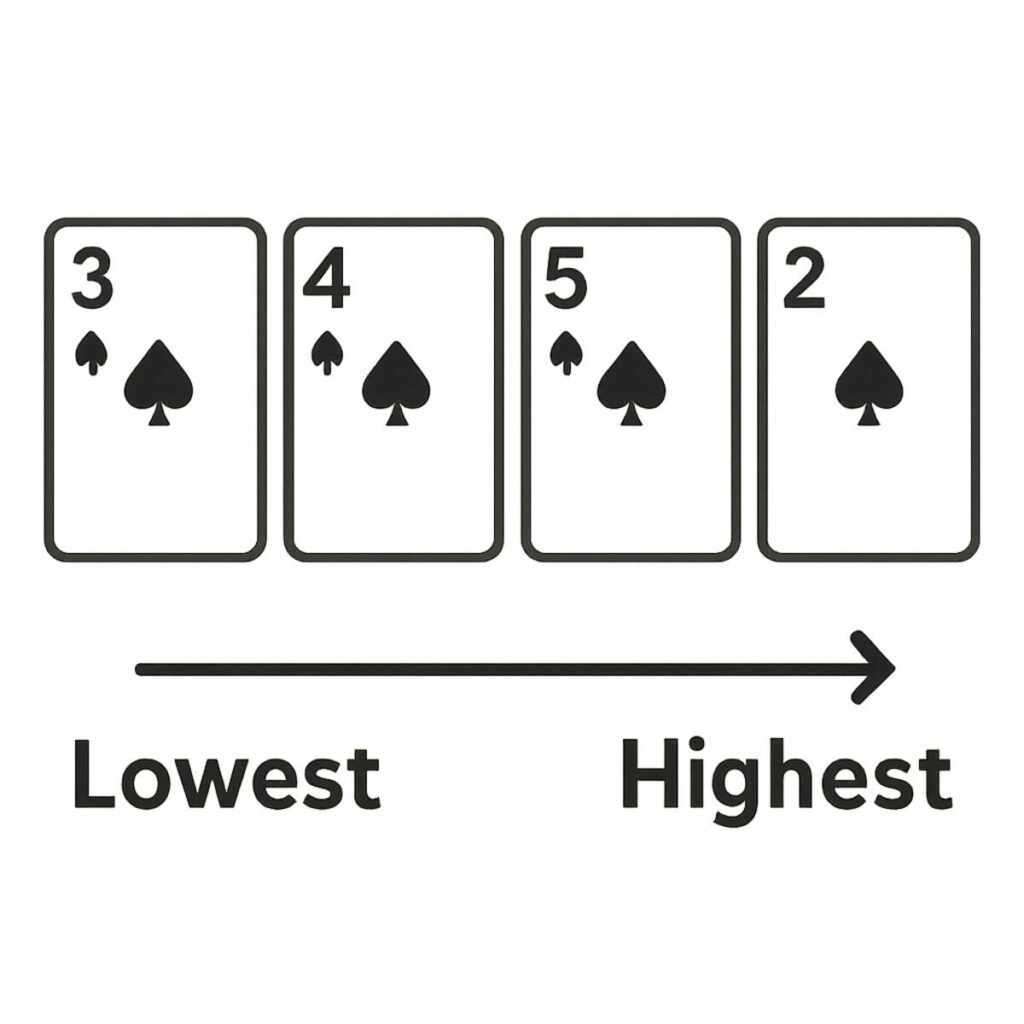
Before you can play, you must grasp the Scum card game’s unique card ranking. Unlike poker or many other games, here high cards are good, and low cards are bad. The weakest card in the entire deck is the 3, making it a card you want to get rid of quickly. Suits (hearts, clubs, etc.) have no power and don’t matter in the standard rules.
Sitting at the very top of the food chain is the 2. Think of the 2 as a secret weapon. A single 2 is powerful enough to beat any other single card, even an Ace. When played, it instantly wins the pile and gives you control to start the next play. Holding onto a 2 gives you a massive advantage, making it a pivotal piece of the scum card values and hierarchy.
With the highest and lowest cards established, the rest fall into place exactly as you’d expect. Here is the complete order from most powerful to least powerful:
2 (Highest), **A, K, Q, J, 10, 9, 8, 7, 6, 5, 4, 3 (Lowest)
Memorize this simple rule—2s are best, 3s are worst—and you’ve mastered the most confusing part of the game. With the card values understood, it’s time to get them into everyone’s hands.
Dealing the Cards: How to Set Up a Game for 4 Players
Getting started is simple. Grab one standard 52-card deck, give it a good shuffle, and choose a dealer. The goal of the deal is to get every single card into someone’s hand. For a classic four-player game, this is perfectly even: each player receives 13 cards. The dealer passes one card at a time to each player, moving clockwise, until the entire deck is gone. No cards are left over.
You might notice if you play with three or five players that the deal doesn’t come out evenly. This is a normal part of the game for some players to start with one more card than others. For example, in a five-player game, two players will have 11 cards while three players have 10. This slight imbalance is part of the challenge and changes from game to game.
For the very first round of the game, there’s a special rule for who goes first. Everyone looks at their hand, and the person holding the 3 of Clubs starts the game. They will play the first card (or cards) to begin the first pile. This rule only applies to the very first round to get things moving. After this, a new set of rules determines the starting player.
With your cards in hand and the first player identified, you’re ready to make a move.
Making Your Move: What Are the Legal Card Combinations in Scum?
When it’s your turn to play, you can’t just play any card you want. Your move must be one of three things: a single card, a set of cards with the same rank, or a pass. The first player to start a pile decides which type of play will be used for that entire round of play.
The simplest play is a single card, like a 5. You can also play a set of cards, which means two, three, or even four cards of the same rank. For example, you could play a pair of 8s, a triple of Queens, or a quad of 4s. A key point in the rules is that suits don’t matter at all when making a set; a pair of 8s could be made of hearts and spades.
The most important rule for your turn is that you must match the type of play that was led. If the player before you started the pile by playing a single 6, you must also play a single card. If they started with a pair of 10s, you must play a pair. You cannot play a single King on a pair of 10s, or a pair of 5s on a single 4. The number of cards played must stay the same until the pile is cleared.
The person with the 3 of Clubs, for instance, can choose to start the game by playing that single 3, or if they have more 3s, they could start with a pair or triple instead. This decision forces everyone else to follow suit.
The Rules of the Climb: How to Play Higher or Pass Your Turn
Once you know you must match the type of play (a pair on a pair, for instance), the second key rule is that you must also play a higher rank. Think of it like climbing a ladder. If the first player puts down a single 8, the next player must play a single 9, Jack, Ace, or any other card higher than an 8. You can’t play a 7. The same goes for sets: a pair of Queens beats a pair of 10s.
But what happens if you can’t play a higher card, or you simply don’t want to use your good cards yet? You must pass. Announce “pass” on your turn, and you’re out for the rest of this specific pile. The passing rules are strict: once you pass, you cannot jump back in to play on the current pile, even if a player after you plays something you could have beaten. You have to wait for the pile to be cleared before you can play again.
This cycle of playing and passing continues around the table until a point is reached where everyone has passed after one person’s play. The person who played the last (and highest) set of cards wins the pile. They get to sweep those cards aside and start the next pile, giving them control of the game.
Clearing the Pile: How to Use the Powerful 2 and Reset Play
The person who plays the highest card that no one else can beat wins control. This is the first and most common way of clearing the pile in Scum. When you play a set of cards—say, a pair of Jacks—and every other player passes, you’ve won the pile. You then sweep those cards away and get to start the next round of play with any card or set you choose, giving you a huge advantage.
The other, more dramatic way to clear the pile involves the game’s secret weapon: the 2. The 2 is the single most powerful card. A single 2 can be played on top of any single card, even an Ace. Playing a 2 instantly ends the round of play for that pile. For example, if someone plays a King and you play a 2, the pile is immediately cleared—no one else gets a turn.
This special power extends to sets as well. If the pile is built on pairs, a pair of 2s will beat any other pair, like a pair of Aces. The same goes for triples. Just like with a normal clear, the player who uses the powerful 2s gets to sweep the pile and start the next one. Mastering when to use your 2s is key to controlling the game and avoiding the dreaded Scum position.
From Scum to President: How to Win a Round and Get Your Role
Winning individual piles is great, but the ultimate goal is to get rid of all the cards in your hand before anyone else. Each round is a race. Your finishing position determines your role—and your power—for the next round. You win a round by emptying your hand first. Play continues until only one player is left holding cards.
Once everyone has finished, you get an official title. The roles below are for a standard four-player game, but the top and bottom positions exist in any version.
- 1st Place to Finish: President
- 2nd Place to Finish: Vice-President
- 3rd Place to Finish: Vice-Scum (sometimes called “Neutral” or “Citizen”)
- 4th Place (Last): Scum
Earning a good role isn’t just for bragging rights; it gives you a major advantage in the next round of play. The President gets a huge boost that makes it easier for them to win again, while the Scum starts at a serious disadvantage. This power dynamic, where the rich get richer and the poor struggle, is what makes the game so competitive. The advantage comes from a special card exchange that happens before the new round begins.
The President’s Power: How Roles and Card Passing Change the Game
This is where being President really pays off, and where being the Scum truly stings. Before the next round, the passing rules give the top players a massive boost. The Scum must identify their two highest-ranking cards and give them to the President. In return, the President looks through their newly strengthened hand and gives any two “junk” cards they don’t want back to the Scum. For example, the Scum might hand over a prized 2 and a King, only to receive a useless 3 and 4 in exchange.
A similar, but less dramatic, exchange happens one step down the ladder. The Vice-Scum (or the second-to-last player) must give their single best card to the Vice-President. The Vice-President then gives one unwanted card back. This interaction reinforces the hierarchy, providing a smaller advantage to the VP while still penalizing the player who finished just ahead of the Scum.
This card swap is the heart of the game’s power dynamic. The President gets stronger by taking the best assets from the poorest player, making it much easier to win again. Meanwhile, the Scum is forced to start the next round with an even weaker hand, making the climb out of last place a true challenge. It creates a thrilling cycle of power struggles and potential upsets.
If you’re playing with a group size where there is no Vice-President or Vice-Scum, then no secondary card exchange happens—only the President and Scum trade.
Breaking the Deadlock: What Happens When There is a Tie?
It’s a rare but exciting moment: one player throws down a pair of Kings, and two other players realize they can both go out on that play. The most common and accepted rule is that the player who played later in the turn order wins the tie. For instance, if Player A starts the pile, and both Player B and Player D can finish on it, Player D gets the higher rank because their turn came after Player B’s. This simple rule keeps the game moving and provides a clear winner.
Of course, like many social card games, you can always use house rules that players agree on. A popular alternative for handling ties is to declare the tied positions “void” for the next round. If two players tie for President, then for the next round, there is no President and no Scum. No cards are exchanged, and everyone starts the next hand on equal footing. This variation can be a fun way to reset the power dynamic and prevent disputes.
Ultimately, the specific rule you choose matters less than making sure everyone agrees on it before the game begins. Deciding on your tie-breaker rule in advance is the best way to prevent arguments and keep the focus on the fun.
3 Simple Tips to Help You Avoid Being the Scum
Knowing the rules is one thing, but having a plan is what separates the President from the Scum. This basic strategy is focused on one goal: making sure you aren’t the last one holding cards.
Your priority should be to get rid of your “orphan” low cards. A single 4 or 5 is almost impossible to play late in a round when everyone else is throwing down pairs and triples. If you win a pile and get to lead, don’t be afraid to start the next one by playing a single low card. It might feel like a weak move, but it removes a card from your hand that would almost certainly get you stuck later on.
On the other hand, treat your high cards like gold. A 2 is the ultimate weapon, a “reset button” that instantly wins you the lead. Don’t waste it on a low-value pile unless you have to. The same logic applies to Aces, Kings, and Queens. Saving these power cards to either steal a pile near the end of a round or to guarantee you can play last is a key part of winning.
Finally, think about how you lead. If you have two pairs in your hand, like a pair of 6s and a pair of Jacks, lead with the 6s. This simple strategy forces other players to use their own pairs to beat you. By drawing out their middle-tier cards early, you give your stronger pair of Jacks a much better chance of winning a pile later.
Spicing It Up: Popular House Rules and Drinking Game Variations
Once you’ve mastered the basic flow of the game, you can introduce a few twists to make things even more dramatic. The best part about Scum is that it’s easily customized. These popular house rules are used by groups all over the world to add another layer of strategy and fun.
One of the most common additions is the Bomb. A bomb is typically a four-of-a-kind (e.g., all four 8s) that can be played at any time on any pile, even if it’s not your turn. Playing a bomb instantly clears the pile and gives you the lead. Another popular option is to add two Jokers to the deck. You can treat them as the ultimate trump cards that beat a 2, or use them as wild cards to complete a set, like using a Joker with three Kings to create a bomb.
For adult gatherings, you can easily turn the game into a drinking game. The rules are simple and tie directly into the social hierarchy established at the end of each round. For a responsible drinking game, assign drinks before the next hand is dealt:
- The President: Makes a new rule for the round.
- The Vice President: Drinks once.
- The Vice-Scum: Drinks twice.
- The Scum: Finishes their drink.
Whether you add bombs for explosive comebacks or turn the game into a social challenge, these variations ensure that no two games of Scum are ever quite the same.
You’re Ready to Crown Your First President
Just a few minutes ago, the idea of a 2 being the best card might have sounded strange. Now, you have a complete understanding of how to play the Scum card game. You’ve moved from simply knowing the goal to having a clear playbook for every phase, from the first deal to the final card exchange. You’re no longer just an observer; you’re ready to be a player.
The entire game follows a simple four-step cycle: deal out all the cards, play your hand to get rid of them, determine roles like President based on who finished first, and finally, exchange cards before starting the next round.
You are now fully equipped to lead your friends through their first game. So, put down your screen, shuffle the deck, and deal the first hand. There’s no better way to learn than by playing, and it’s time to find out who will be your group’s first President.