


If you’ve ever seen a special kind of glass water pipe used for cannabis, you’ve likely noticed it: a sticky, golden-brown residue collecting on the inside. That device is a dab rig, and it’s designed for vaporizing potent cannabis concentrates instead of flower. While your first instinct might be to clean that gunk out and toss it, what if it wasn’t just trash? Get the Best information about dab reclaim.
That leftover material has an official name: dab reclaim. This isn’t the same as the black, ashy resin you’d find in a traditional pipe. Instead of burnt plant matter and tar, reclaim is simply the vapor from past dabs that has cooled and re-condensed back into a sticky, oil-like substance inside the cool glass of the dab rig.
So, what is dab reclaim and why do people bother with it? The main reason is that it’s not inert waste. Because it’s made of re-condensed vapor, this buildup still contains active cannabinoids like THC. In practice, this means that even though it’s a leftover, reclaim is often surprisingly potent, a fact confirmed by countless user experiences across online forums and communities.
This discovery leads to a debate among users: is this byproduct a resourceful way to save money, or is it a harsh, unpleasant substance better left in the cleaning bucket? Before you decide, it’s important to understand what reclaim is made of, the safe ways to collect it, and if it’s truly worth the effort.
What’s the Difference: Reclaim vs. Resin?
If you’ve ever cleaned a traditional pipe used for smoking cannabis flower, you’re familiar with the black, tarry gunk left behind—that’s resin. It’s easy to look at the golden-brown rig buildup and assume it’s the same thing. While they appear similar, reclaim and resin are worlds apart, and the difference comes down to a simple concept: vapor versus smoke.
Traditional resin is the byproduct of combustion, or burning. It’s essentially tar and ash mixed with plant matter, creating a harsh and messy substance. Dabbing, however, uses vaporization. Your concentrate is heated just enough to turn into a vapor, not smoke. Reclaim is simply that cannabinoid-rich vapor that has cooled down and re-condensed into a sticky liquid inside your rig. Think of it as the clean condensation on a pot lid versus the black soot from a candle flame.
Because it was never actually burned, reclaim is significantly cleaner than resin. It doesn’t contain the tar and particulate matter that make resin taste so harsh. This is the main reason why many people consider collecting their reclaim, while pipe resin is almost always destined for the trash. But being cleaner is one thing; the big question is, how potent is it?
The Big Question: How Potent Is Dab Reclaim?
Just how potent is that leftover gunk? The answer might surprise you. While it may look like low-grade material, dab reclaim is often remarkably strong. Because it’s made of re-condensed cannabinoids, lab tests frequently show reclaim containing THC levels anywhere from 40% to over 60%. For perspective, that’s significantly more potent than most cannabis flower on the market. This high concentration of active compounds is the primary reason why budget-conscious users go to the trouble of collecting it in the first place.
But if it’s so potent, what’s the catch? The first thing you’ll notice when consuming reclaim is the taste—or rather, the lack of it. Fresh cannabis concentrates get their delicious flavors and aromas from delicate compounds called terpenes. Think of them as the essential oils of the cannabis plant. During the initial dab, these volatile terpenes are the first things to burn off, leaving behind the heavier cannabinoids. What you’re left with in reclaim is potent, but one-dimensional; it’s like getting the alcohol from a fine wine without any of the fruity, complex flavors.
This chemical shift doesn’t just affect the taste; it can also alter the high. Without the original terpenes to guide and shape the experience, the effects of reclaim can feel very different from a fresh dab. Many people report that reclaim provides a heavier, more sedative, and less nuanced high. Instead of the uplifting or creative effects you might have enjoyed from the original concentrate, you may just feel a blunt, sleepy sensation. With these expectations in mind, the most critical question remains: is it actually safe to consume?
Safety First: Is It Safe to Consume Dab Reclaim?
The most critical question is whether reclaim is actually safe to consume. The short answer is: it depends entirely on the original concentrate and how the reclaim is collected. The leftover rig buildup itself isn’t inherently dangerous, but the process of getting it out and the way you dabbed in the first place can introduce risks you need to be aware of.
The biggest red flag is the potential for residual solvents. Many people clean their rigs and collect reclaim at the same time by using a solvent like high-proof grain alcohol or isopropyl alcohol. While this method is effective, it’s only safe if you allow the alcohol to evaporate completely from the final product. Inhaling leftover alcohol fumes is unhealthy, so if you use this method, you must be patient. If your collected reclaim smells anything like alcohol or chemicals, it’s not ready and should not be consumed.
Beyond solvents, the temperature you dab at plays a surprisingly important role. Dabbing at extremely high temperatures is a bit like burning your food on a skillet; it not only destroys the flavor but can also create harsh, unwanted compounds. This charred material can then mix in with your reclaim, making it taste harsher and potentially less clean. Because of this, reclaim collected from low-temperature dabs is generally considered purer and safer than the dark, tarry residue left behind from scorching-hot dabs.
Ultimately, the safety of your reclaim is in your hands. The golden rule is simple: if you aren’t 100% sure how it was collected or what it contains, don’t consume it. Never use reclaim from a rig you didn’t collect yourself. The collection method you choose is therefore the most important step in the entire process. Here are the safest ways to do it.
Collection Method 1: The Easy, Solvent-Free Way
For anyone concerned about the risks of using solvents, there’s great news: you don’t need them. The simplest and safest way to get the bulk of the reclaim out of your rig involves nothing more than a little heat and gravity. This solventless method is perfect for beginners because it completely removes the risk of leftover chemicals in your final product, ensuring what you collect is as clean as what went in.
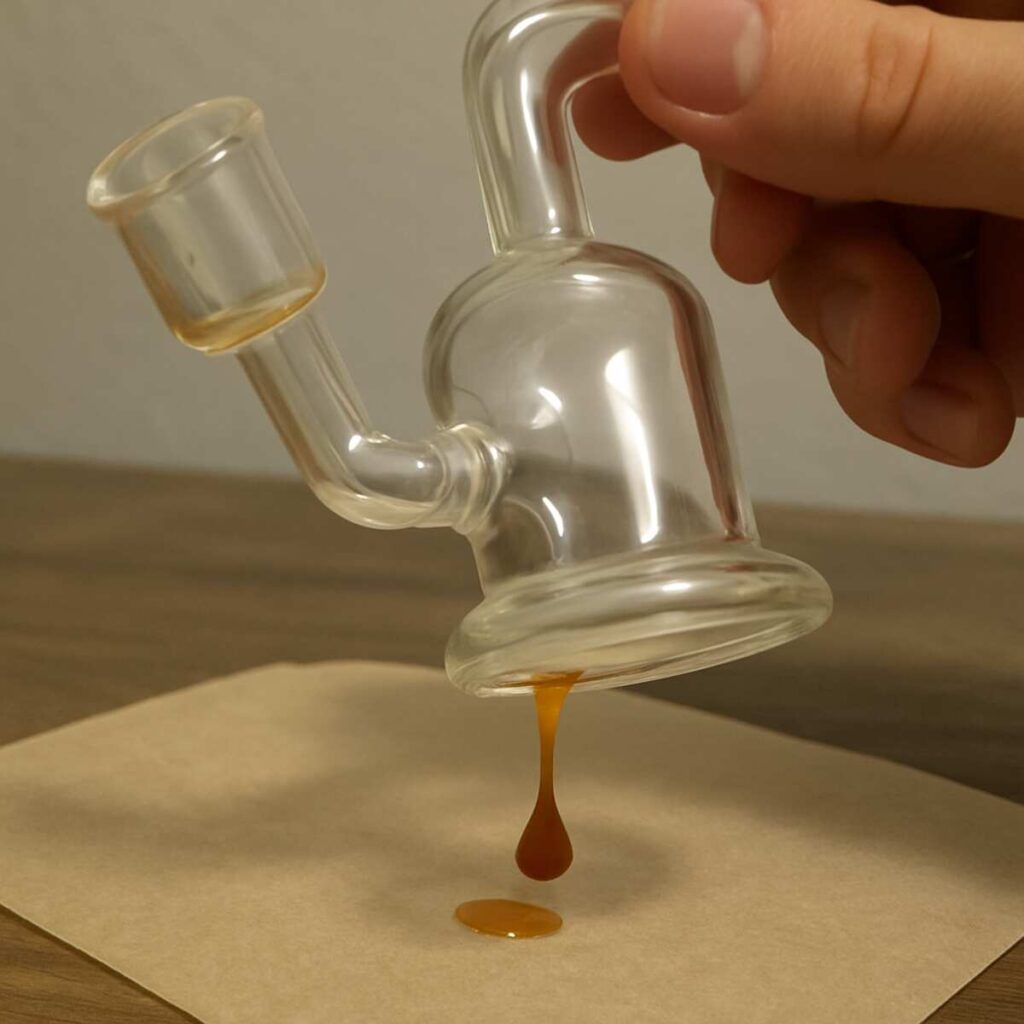
The process itself is straightforward and focuses on gently melting the sticky reclaim so it drips out. To make collection easy, you’ll want a non-stick surface ready, like a piece of parchment paper (the kind you use for baking) or a silicone mat. A regular plate will just leave you with a new sticky mess, so a proper surface is key.
Ready to try it? Here’s the best way to get that oil out of your rig, step-by-step:
- Drain It: First, make sure you remove all the water from your dab rig.
- Position It: Hold the rig upside down, with the mouthpiece pointing toward your parchment paper or silicone mat.
- Warm It: Using a lighter or a torch from a safe distance, gently and briefly warm the outside of the glass where the reclaim has built up. You aren’t trying to heat the glass red-hot; you just want to warm it enough to loosen the reclaim.
- Collect It: Watch as the reclaim liquefies and drips down onto your collection surface. Move the heat along the glass to guide the rest of it out.
While this heat method is fantastic for a quick and safe collection, it often leaves a thin layer of residue behind. It won’t get your rig sparkling clean. For that, you might need a more thorough approach.
Collection Method 2: Using Alcohol for a Deeper Clean
While the heat method is great for a quick collection, it often leaves a stubborn, sticky film behind. If your goal is getting your rig spotlessly clean while also saving every last bit of oil, you’ll need a more thorough approach. This is where a solvent comes in. Think of a solvent like a powerful cleaning agent for your kitchen grease—it’s a liquid that can dissolve the tough, sticky buildup that water can’t handle. For reclaim, the best and most common solvent is high-proof alcohol.
This technique of using isopropyl alcohol for collection is incredibly effective, but it comes with a critical safety rule: you must let all the alcohol evaporate before the reclaim is safe to use. You’ll want to use alcohol that is 90% purity or higher, like 91% isopropyl alcohol (rubbing alcohol) or a grain alcohol like Everclear. Lower-proof alcohols contain too much water, which will not evaporate properly.
Here’s how to collect oil from a dab rig using this method for a deep clean:
- Prep the Rig: Pour out any water and let your rig air dry for a bit.
- Add Alcohol: Pour a small amount of your high-proof alcohol into the rig—just enough to coat the inside walls when you swirl it.
- Shake Gently: Securely plug the openings with your fingers or stoppers and shake gently. You’ll see the reclaim dissolve into the alcohol, turning it into a dark, golden-brown liquid.
- Pour and Wait: Pour this liquid into a shallow glass dish, like a Pyrex baking dish. The wide surface area is key for the next step.
- Evaporate Completely: Place the dish in a well-ventilated area, away from any open flames or sparks, for 24-48 hours. This step cannot be rushed.
The evaporation process is the most important part of cleaning your rig and saving the oil safely. Over the next day or two, the alcohol will slowly disappear into the air, leaving only the sticky reclaim behind. You’ll know it’s ready when the dish is completely dry, has no liquid pooling, and has absolutely no alcohol smell when you lean in close. The result will be a sticky, amber-colored layer of oil, ready for its next use.
The Best Use: Making Easy Edibles with Reclaim
So you’ve scraped or dissolved out a glob of sticky, golden-brown oil. Now what? While you could try to dab it again, the best and most popular use for reclaim is making edibles with leftover concentrate. The main reason is simple: flavor. Reclaim tends to have a harsh, burnt taste because the flavorful, delicate compounds (terpenes) were burned off during your original dab session. By mixing it into food, especially something rich and sweet like brownies or cookies, you can easily mask that unpleasant taste while still getting all the benefits of the active ingredients.
The real magic of using reclaim for edibles is that it saves you a huge, often confusing, step. To make edibles from fresh cannabis, you first have to heat it in an oven in a process called decarboxylation, which “activates” the THC. Without this step, your edibles won’t have any effect. But reclaim is different. The intense heat of the original dab has already done this for you. This means there’s no need for any extra prep for decarbing rig oil for edibles—your reclaim is already active and ready to be absorbed by your body.
Making an infusion is surprisingly simple. Because the active compounds in cannabis love to bind with fat, all you need to do is dissolve your reclaim into butter or oil. Gently warm your desired amount of coconut oil or butter in a small saucepan over the lowest possible heat. Once it’s warm, add your collected reclaim and stir continuously until it has completely dissolved into the oil, creating a consistent, dark liquid. You can now substitute this infused oil or butter into any recipe you like.
One final word of caution is about strength. Because reclaim is a condensed collection from many past sessions, it can be difficult to know how potent the dab residue truly is. It’s often surprisingly strong. When trying an edible made with reclaim for the first time, always start with a very small portion—much smaller than you normally would—and wait at least two hours to see how you feel before considering more. While edibles are the most popular route, some people still wonder if they can just put the reclaim back in their rig.
Can You Vape or Re-Dab Reclaim? Here’s What to Expect
The short answer is yes, you technically can vape leftover dab wax. It still contains the active ingredients that produce an effect. However, there’s a significant catch: the experience is almost universally described as unpleasant. Remember those terpenes we talked about—the compounds responsible for flavor and aroma? They were mostly vaporized during the first dab session. Without them to smooth out the vapor, what’s left is harsh on the throat and lungs and carries a distinct, unappealing taste.
Beyond the initial bad taste, the physical sensation of dabbing reclaim is often what turns people off. The vapor tends to be hotter and lacks the fragrant qualities of a fresh concentrate, which can lead to more coughing. As for the effects of smoking old dabs, many users report a less-rounded experience. Instead of the nuanced high from the original concentrate, the feeling is often described as flatter, heavier, or more sleepy. The answer to ‘what does old concentrate taste like?’ is simple: it tastes like the leftovers it is—often peppery, burnt, or simply bland.
Ultimately, re-dabbing your reclaim comes down to a simple trade-off: you’re sacrificing all flavor and comfort for raw potency. This is precisely why making edibles remains the most highly recommended use—it allows you to bypass the harsh taste entirely while still benefiting from the active compounds. Whether you decide to brave the vapor or bake a batch of brownies, you’ll want to make sure you’re storing your collected reclaim correctly to preserve what’s left of its potency.
How to Store Your Collected Reclaim for Maximum Freshness
Once you have your reclaim, putting it in the right container is the first step to keeping it useful. For easy, short-term access, a small silicone container is your best friend; the non-stick surface makes getting the sticky oil out a breeze. If you’re saving it for longer, an airtight glass jar is a better choice. Glass is less porous than silicone, meaning it does a superior job of preventing air from getting in and slowly drying out your reclaim.
Next, you’ll want to find a proper home for that container. The three biggest enemies of cannabinoid potency are heat, light, and air. Storing your collected dab oil in a cool, dark, and dry place—like a drawer or a cabinet—is crucial. Think of it like storing kitchen spices; leaving them out in the sun and heat causes them to lose their flavor and potency much faster. The same principle applies here, as exposure will speed up the natural THC degradation in leftover concentrate.
So, how long does it last? When stored correctly, reclaim can maintain its potency for several months without a significant drop-off. Learning how to store reclaim properly ensures that the effort you put into collecting it doesn’t go to waste. Now that you know how to gather, use, and preserve it, it’s time to answer the final, most important question.
The Final Verdict: Is Collecting Reclaim Worth Your Time?
What was once a mysterious, sticky gunk in your dab rig is now something you can view with an informed eye. You are now equipped with the knowledge to decide if collecting that leftover material is worth your time and effort.
So, what’s the right move for you? It all comes down to your priorities as a cannabis user. If you value the pure flavor and nuanced effects of fresh concentrates, your path is simple: focus on regularly cleaning your rig and starting fresh. But if you are a resourceful user looking to stretch your budget, learning the process of cleaning your rig and saving the oil is a fantastic way to maximize value. This makes dab reclaim a practical bonus, not a primary goal.
Whatever you decide, always prioritize safety, especially if you use a solvent for collection—ensure it has fully evaporated before any use. Whether you make edibles with leftover concentrate or simply enjoy the better taste from a pristine rig, you are making an informed choice that best fits your cannabis journey.