


In today’s digital age, having a strong online presence is crucial for small businesses. On-page SEO is a key component of this presence. It involves optimizing individual web pages to rank higher in search engines. Choose the best free seo tool.
For small businesses and startups, mastering on-page SEO can be a game-changer. It helps attract more visitors and potential customers. This guide will walk you through the essentials of on-page SEO.
You’ll learn how to optimize your website effectively. From keyword research to crafting engaging content, we’ve got you covered. We’ll explore the importance of mobile-friendliness and page speed.
Understanding search intent and user experience is vital. These elements can significantly impact your website’s performance. We’ll also delve into local SEO strategies to boost your visibility.
By the end of this guide, you’ll have a comprehensive understanding of on-page SEO. You’ll be equipped with the tools and techniques needed to succeed. Let’s embark on this journey to enhance your online presence.
What Is On-Page SEO? Understanding the Basics
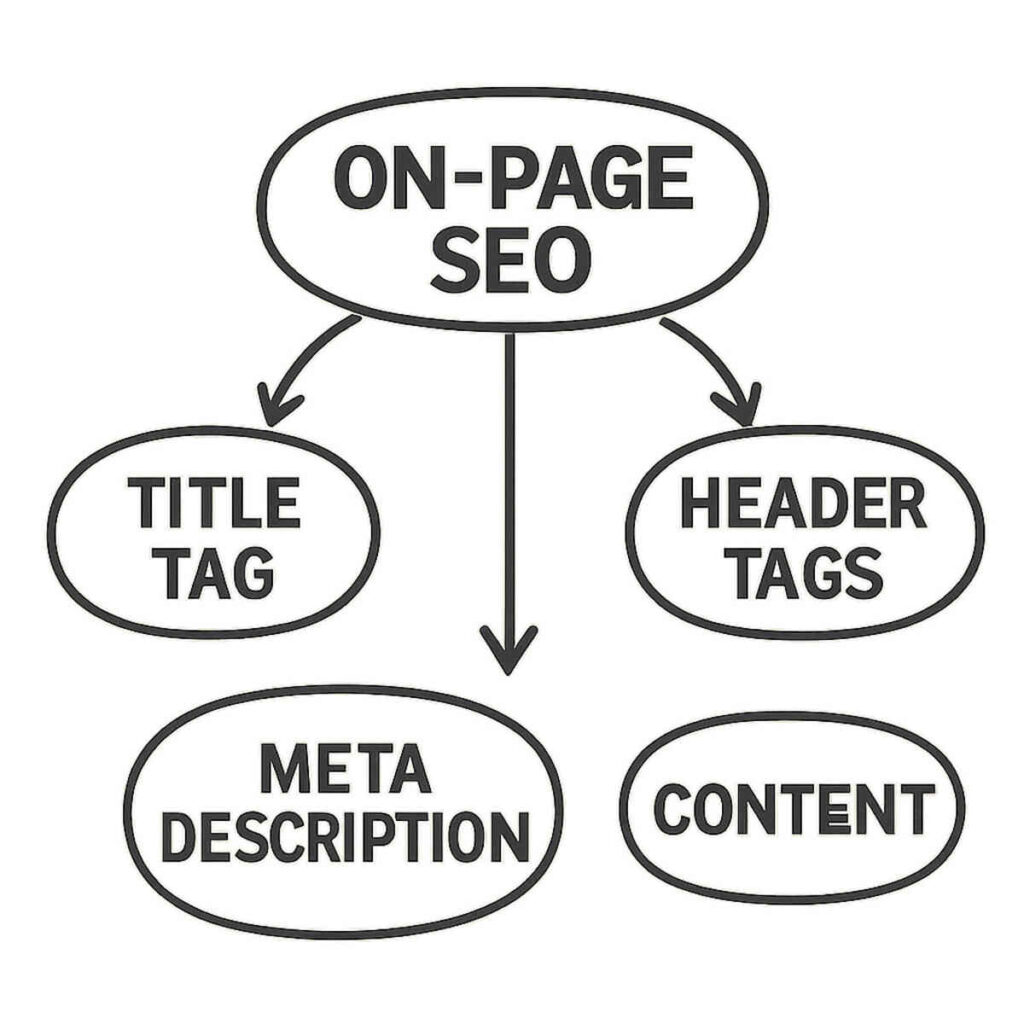
On-page SEO refers to optimizing each web page to improve visibility in search engines. Unlike off-page SEO, which focuses on activities outside your site, on-page SEO focuses on the elements of a page. These elements collectively impact how search engines understand your website.
The core elements of on-page SEO include title tags, meta descriptions, and header tags. These components provide essential information to search engines about the content. They help determine the relevancy of your web pages to search queries.
Optimizing these elements enhances your site’s search performance. Search engines use these signals to rank pages effectively. Proper optimization ensures search engines correctly interpret your content’s context.
Here’s a breakdown of key on-page SEO components:
- Title Tags: Define the page’s main topic and appear in search results.
- Meta Descriptions: Summarize the page’s content, influencing click-through rates.
- Header Tags: Structure the content to make it user-friendly and logical.
Moreover, content quality plays a pivotal role. It should be relevant, engaging, and valuable to the target audience. Search engines prioritize quality content that satisfies user intent.
Internal linking is another vital aspect. It distributes page authority and guides crawlers through your site. This enhances indexing and improves the user experience.
By understanding these basics, you’re on the path to mastering on-page SEO. This knowledge forms the foundation for more advanced strategies.
Why On-Page SEO Matters for Small Businesses and Startups
On-page SEO is crucial for small businesses aiming to enhance online visibility. It is an effective tool to compete with larger corporations. By optimizing your web pages, you can attract more visitors.
Small businesses benefit from improved local search results. This helps in capturing potential customers nearby. More visibility means more opportunities for growth and success.
Search engines value websites that are well-optimized. With proper on-page SEO, your website can rank higher. This means more organic traffic from search engines.
Additionally, on-page SEO improves the user experience. A well-structured website keeps visitors engaged and reduces bounce rates. Happy visitors often lead to higher conversion rates and customer loyalty.
Consider these key benefits of on-page SEO for small businesses:
- Enhanced Visibility: Improved rankings bring more attention.
- Cost-Effective Marketing: Organic traffic reduces advertising costs.
- Local Reach: Optimizes search results for local audiences.
Incorporating these strategies ensures your small business thrives in the competitive online space.
The Foundations: How Search Engines Work
Search engines play a vital role in online discovery. They use complex algorithms to determine website rankings. Understanding this is crucial for effective on-page SEO.
Search engines use bots, known as crawlers. These bots scan websites to collect data. The data is then indexed, allowing search engines to retrieve relevant results.
Once indexed, a site’s relevance and authority are evaluated. This process involves analyzing keywords, links, and content quality. High-quality, optimized sites rank better.
Ranking factors include several on-page elements. These encompass keywords, meta tags, and content structure. Properly optimized elements can significantly impact rankings.
Consider these foundational elements that search engines evaluate:
- Keywords: Essential for content relevance.
- Meta Tags: Provide search engines with page summaries.
- Content Quality: Engaging, informative content ranks higher.
By understanding these processes, small business owners can better align their on-page SEO efforts. This alignment leads to improved visibility and a stronger online presence.
Keyword Research for Small Business SEO Success
Effective keyword research is the cornerstone of successful SEO. It’s essential for small businesses aiming to increase online visibility. Choosing the right keywords helps connect your business with potential customers.
Start by brainstorming relevant terms. Think about words your customers might use. Tools like Google Keyword Planner can refine these ideas.
Long-tail keywords are often more beneficial. They are more specific and less competitive. This specificity targets niche markets, giving smaller businesses an edge.
Understanding the competition is crucial. Analyze which keywords competitors rank for. This insight can reveal gaps and opportunities in your strategy.
Here are tools and methods to enhance your keyword research:
- Google Trends: Discover trending search queries.
- SEMrush: Analyze competitors and find keyword gaps.
- Ahrefs: Provides keyword difficulty scores and suggestions.
It’s important to focus on search intent. Determine what users seek when they type a keyword. Aligning your content with this intent improves user engagement.
High search volume isn’t everything. Consider relevance to your business offerings. The most searched keyword might not be your best choice if it’s irrelevant.
Content should naturally incorporate chosen keywords. Avoid keyword stuffing, which can harm user experience and rankings.
Regularly revisit and update your keyword strategy. Trends and user interests evolve over time. Keeping pace with these changes ensures continued relevance.
How to Find the Right Keywords for Your Business
To identify the best keywords, start with a basic list. Write down terms directly related to your products or services. These are your seed keywords.
Next, use tools like Ubersuggest to expand this list. These tools provide keyword variations and additional ideas. They give insight into search volumes and competition.
Understanding user search behavior is beneficial. This involves analyzing how people find similar products. Customer feedback and reviews can offer clues.
Consider local SEO if targeting a specific geographic area. Local keywords might include city names or regional phrases. These can boost visibility in localized searches.
Here are the steps to refine your keyword selection:
- Review Competitor Sites: See the keywords they target.
- Use Google Auto-Suggest: Observe what appears in search suggestions.
- Explore Question-Based Keywords: Use tools like AnswerThePublic.
Choose keywords that balance volume, competition, and relevance. A mix ensures broader reach while attracting the right audience.
Mapping Keywords to Pages: Building a Logical Structure
Mapping keywords to specific pages is crucial. It ensures each keyword has a dedicated destination. This strategy prevents cannibalization, where multiple pages compete for the same term.
Start by listing your website’s main pages. Assign each page a primary keyword based on relevance. This makes the content focused and coherent.
Here’s a simple mapping process you can follow:
- Home Page: Target a broad, brand-focused keyword.
- Service Pages: Use keywords directly related to services offered.
- Blog Posts: Focus on long-tail keywords and niche queries.
Grouping related keywords is also effective. This approach creates clusters of content around related topics. It enhances internal linking and content depth.
Mapping ensures a clear structure that guides users and search engines. A well-organized website ultimately boosts user experience and SEO performance.
Crafting SEO-Friendly Content That Converts
Creating content that ranks well and engages users is a dual goal. For small businesses, quality content can differentiate you from competitors. It’s not just about keywords; it’s about context and value.
Firstly, focus on understanding your audience’s needs. Are they looking for solutions or information? Ensure your content addresses these requirements directly.
Conveying clear, actionable insights enhances trust. Content should guide readers smoothly from introduction to conclusion. This pathway should encourage them to take the next step, be it signing up or purchasing.
Using engaging headlines is crucial. A compelling headline draws attention and sparks curiosity. It should hint at the value within the content.
Consider integrating multimedia elements. Images, videos, and infographics enrich the user’s experience. They offer alternative ways of engagement and understanding.
Here’s what to keep in mind for engaging content:
- Address Pain Points: Solve common issues they face.
- Use Clear CTAs: Direct them explicitly to the next action.
- Include Real-Life Examples: Add credibility and relatability.
Also, consistency in publishing is key. Regular updates keep your audience interested and search engines attentive. It signals that the site is active and informative.
Collaboration with other industry experts can enhance the value of content. Joint efforts can bring diverse perspectives and broaden reach.
SEO-friendly content is not a one-off task. It requires continuous refinement and adaptation based on feedback and analytics.
Understanding Search Intent and Content Relevance
Grasping search intent is pivotal for crafting relevant content. Users search with specific objectives in mind. Understanding these helps in creating targeted and effective content.
Consider the different types of search intent:
- Informational: Users seek answers or knowledge.
- Navigational: They aim to reach a specific site.
- Transactional: They’re ready to make a purchase.
To ensure content matches intent, research is essential. Tools like Google Analytics reveal what users seek. Use this data to refine content focus and depth.
Incorporate keywords that align with various search intents. This diversity ensures broader reach and higher chances of engaging visitors.
Content Formatting and Readability Best Practices
Good formatting enhances readability and SEO performance. It’s about making content easy to consume and understand. Short paragraphs and bullet points break up text effectively.
Use subheadings to structure content logically. They guide readers through the content seamlessly. Subheadings should reflect the topic of the subsequent paragraphs.
Adopting a conversational tone can boost readability. This approach engages readers more effectively, making content relatable.
Key elements for enhancing content readability include:
- Bullet Points: Improve clarity and digestibility.
- Short Sentences: Maintain simplicity and focus.
- Ample White Space: Avoids clutter and enhances visual appeal.
Testing content across devices ensures consistent readability. Mobile friendliness is crucial, as more people access content via mobile devices.
Keep sentences concise yet comprehensive. They should communicate key points without overwhelming readers.
Optimizing On-Page Elements: Titles, Meta Descriptions, and Headers
Optimizing on-page elements is crucial for effective SEO. Titles, meta descriptions, and headers play pivotal roles in this effort. They not only improve visibility but also enhance user engagement.
Title tags often make the first impression on your page. They appear on search engine results pages (SERPs) and browser tabs. Craft them to be clear, engaging, and keyword-rich.
A well-optimized title tag can increase click-through rates (CTR). Keywords should appear naturally, without awkward stuffing. This approach enhances both user experience and SEO value.
Meta descriptions serve as concise summaries of your page content. They help users understand what to expect from a click. Although not a direct ranking factor, they significantly influence CTR.
Headers, including H1, H2, and H3 tags, organize content into logical sections. This structure aids both users and search engines in navigating your content efficiently.
Effective headers improve accessibility and ease of reading. They should succinctly describe the content of the following section. Proper use of keywords in headers can bolster SEO efforts.
In summary, effective optimization of these elements involves:
- Using Targeted Keywords: Enhances relevance and visibility.
- Ensuring Readability and Clarity: Engages both users and search engines.
- Maintaining Consistent Branding: Strengthens brand voice and recognition.
Continuously monitor the performance of these elements using SEO tools. They can provide insights for further refinement. Adjust as necessary to maintain alignment with evolving SEO best practices.
Title Tags: Crafting Click-Worthy Headlines
Title tags are your first line of communication with searchers. They should capture attention and convey your page’s essence.
Crafting effective title tags involves balancing creativity and SEO. Aim for concise, informative phrases that incorporate primary keywords. Ensure your titles accurately reflect the content’s value.
To improve title effectiveness, consider these techniques:
- Include Power Words: Entice curiosity and click-through.
- Limit Length: Keep titles between 50-60 characters for best display.
- Highlight Benefits: Showcase your unique offering or solution.
Analyze competitors to gauge effective title strategies. This comparison can inspire new approaches and innovation in your own titles.
Meta Descriptions: Boosting CTR and Relevance
Meta descriptions summarize your page to entice potential visitors. Though not a direct ranking factor, their impact on CTR is undeniable.
Craft descriptions that are informative yet intriguing. They should persuade users that your content holds the answers they seek.
Here’s how to enhance your meta descriptions:
- Incorporate Keywords: Improve relevance and visibility.
- Use Active Language: Encourage action and engagement.
- Keep It Concise: Aim for approximately 150-160 characters.
Test different approaches to identify which generates the best results. Continuously refine based on performance metrics for optimal outcomes.
Header Tags: Structuring Content for Users and Search Engines
Header tags are essential for structured and readable content. They help define the hierarchy and flow of your text.
Start with H1 as the main topic and use H2 and H3 for subtopics. This structure aids both readers and search engines in understanding your content.
Use these tips to make the most of header tags:
- Organize Logically: Ensure smooth content flow.
- Incorporate Keywords: Naturally fit them within headers.
- Enhance Readability: Break up text into digestible sections.
Regularly review header efficacy with analytical tools. This evaluation helps maintain alignment with evolving content strategies.
URL Structure and Internal Linking Strategies
URL structure and internal linking are foundational to on-page SEO. A clean, descriptive URL format is beneficial for both users and search engines. It offers insights into page content and improves clickability.
An optimized URL should be concise and keyword-inclusive. Avoid using complex strings of numbers or irrelevant characters. Descriptive URLs enhance user trust and improve search visibility.
Consider these best practices for URL structuring:
- Use Hyphens: Separate words for better readability.
- Include Keywords: Enhance relevance and SEO.
- Keep It Short: Avoid unnecessary words and characters.
Internal linking is equally critical in guiding both users and search engine crawlers. It creates pathways through content, improving site navigation and the distribution of authority. Each link should serve a purpose, guiding readers to additional valuable information.
With internal links, ensure that your anchor text is descriptive. This practice helps improve context and relevance for search engines. A well-planned internal link structure also increases time spent on the site and reduces bounce rates.
Monitor your site’s internal links regularly to prevent broken links and improve user experience. Tools can assist in identifying opportunities for optimization. Regular audit keeps your linking strategy robust and effective.
Image Optimization for SEO and User Experience
Images are vital to website appeal and user interaction. However, they must be optimized to enhance SEO and user experience. Proper image optimization not only improves load times but also boosts search rankings.
To start, choose the correct image format. Different formats, like JPEG and PNG, suit various needs. JPEGs are excellent for photographs, while PNGs are best for graphics with transparency. Selecting the right format ensures quality and efficiency.
Reducing file size is crucial for speed. Large images slow page load times, harming user experience and SEO. Use tools to compress images without losing quality. Faster load times mean happier visitors and better search performance.
Alt text is another critical component. It provides a text alternative that helps search engines understand an image’s content. Descriptive, keyword-rich alt text enhances accessibility and search visibility.
Consider these tips for image optimization:
- Rename Files Descriptively: Use keywords.
- Optimize File Size: Balance size and quality.
- Add Alt Text: Improve accessibility and SEO.
Always consider the overall design. Images should complement your website’s visual theme without overwhelming the layout. A seamless integration enhances both appearance and navigation, promoting user satisfaction.
Regularly review and update your images to maintain SEO effectiveness. As trends and technologies evolve, ensure that your visual content remains optimized and competitive.
Mobile-Friendliness and Responsive Design
In today’s digital age, mobile-friendliness is not optional. It’s vital for any small business aiming for success online. Users increasingly browse the internet on mobile devices.
Responsive design ensures your website looks great on any screen size. From phones to tablets, a site must adapt seamlessly. This ensures a consistent experience across devices.
Google favors mobile-friendly sites in rankings. This preference reflects the way people access information. Ignoring mobile usability can hurt your search visibility.
To implement responsive design, use flexible layouts. CSS media queries help create adaptable designs. This approach ensures elements resize and rearrange automatically.
Consider key responsive practices:
- Use Scalable Fonts: Enhance readability.
- Optimize Touch Elements: Make buttons easy to tap.
- Test Across Devices: Ensure consistent experience.
Adopting a mobile-first mindset makes your site future-proof. It aligns with user behavior and search engine expectations. Prioritizing mobile-friendliness enhances both SEO and user satisfaction.
Regular checks ensure ongoing mobile optimization. Stay ahead by adapting as technologies and user preferences evolve.
Page Speed Optimization: Tools and Techniques
Page speed is crucial for user experience and SEO. Visitors expect fast-loading websites. Slow pages lead to high bounce rates and lost opportunities.
To enhance page speed, focus on key areas. Start by compressing images. Large files significantly slow down your site. Use tools like TinyPNG or JPEG Optimizer to reduce image sizes without losing quality.
Leverage browser caching to improve speed. Caching stores static files, reducing load times for returning visitors. Configuring your server to cache resources makes the user experience smoother.
Minimizing HTTP requests also boosts performance. Each element on a webpage, such as a script or an image, requires a separate request. Fewer requests mean faster pages.
Explore the following tools for insights and optimization:
- Google PageSpeed Insights: Offers detailed performance reports.
- GTmetrix: Analyzes speed and provides actionable suggestions.
- Pingdom Tools: Tests speed and tracks performance over time.
Consider enabling lazy loading for images. This technique delays loading images until needed. It reduces initial load time and enhances speed.
Regularly audit your site’s speed and optimize accordingly. Use these tools for ongoing improvements.
Schema Markup and Structured Data for Small Businesses
Schema markup is a powerful SEO tool. It helps search engines understand your content better. By adding structured data, you can enhance search results with rich snippets.
For small businesses, schema provides numerous benefits. It can showcase reviews, product details, or event information directly in search results. This improves your click-through rate significantly.
Start by identifying the data types you want to mark up. Common types include local business info, products, and reviews. The right schema elements depend on your specific needs.
Consider these schema types for small businesses:
- LocalBusiness: Highlights important business details.
- Product: Displays product names, images, and prices.
- Review: Shows customer feedback and ratings.
To implement schema markup, use tools like Google’s Structured Data Markup Helper. This tool simplifies the process for beginners. After adding markup, test your implementation using Google’s Rich Results Test.
Keep your structured data up-to-date. Accurate data ensures search engines display correct information. Regular updates help maintain your site’s competitive edge.
User Experience (UX) and Its Impact on SEO
User experience (UX) is crucial in retaining visitors. A well-designed, easy-to-navigate website keeps users engaged. This lowers bounce rates, a key factor in SEO.
Search engines prioritise sites offering a great user experience. Sites that load quickly and are easy to use rank better. A smooth, responsive design enhances user satisfaction.
Consider essential UX elements for SEO improvement:
- Intuitive Navigation: Users should easily find what they’re looking for.
- Fast Load Times: Pages should load quickly for a better experience.
- Responsive Design: Ensure your site is mobile-friendly.
Enhancing UX doesn’t stop at design. Content also plays a significant role. User-friendly language and easy readability engage visitors. Break content into digestible sections with headings and lists.
User behavior signals impact search engine rankings. Metrics like time on site and pages per session reflect user satisfaction. Therefore, continuous UX testing and improvements are necessary.
Address user feedback promptly. It provides insights into potential areas for improvement. Enhanced UX leads to satisfied customers and better SEO outcomes.
Local SEO Essentials for Small Businesses
Local SEO is vital for small businesses aiming to attract nearby customers. It helps appear in local search results, increasing visibility. Focusing on local optimization tactics can drive foot traffic to your business.
Start by optimizing your Google Business Profile. This profile is crucial for local search presence. Ensure your business information is accurate and up-to-date.
Engage with online reviews actively. Encourage satisfied customers to leave positive feedback. Respond to all reviews, showing you value customer opinions.
Implement local keywords in your website content. These include city names and local terms. It helps in appearing relevant to nearby searchers.
Utilize online directories for additional visibility. Consistent information across directories supports search engine trust. Ensure business details match on all platforms.
Consider these local SEO strategies:
- Optimize Google Business Profile: Include correct and detailed business info.
- Encourage Online Reviews: Build credibility with positive customer feedback.
Use these directory tips:
- Consistent NAP (Name, Address, Phone): Critical for search engines and directories.
- Local Citations: Listing in local directories enhances local SEO.
Implementing these strategies will improve local search performance. Consistent updates and engagement strengthen your local online presence.
Google Business Profile Optimization
Your Google Business Profile is a prime local SEO tool. It enhances visibility in local searches and Maps. Accurate information on this profile is critical.
Make sure all details are complete. Include your business name, address, and phone number (NAP). These details must align with your website and directories.
Add rich content, like photos and business categories. This improves customer engagement and search visibility. Well-selected categories help in appearing for relevant searches.
Consider these optimizations:
- Accurate Business Info: Keep NAP consistent.
- Engaging Content: Include photos and detailed descriptions.
Regularly update your profile. Reflect changes in hours or services promptly. This keeps customers informed and maintains search engine accuracy.
NAP Consistency and Local Citations
NAP consistency is a cornerstone of local SEO. Ensuring uniformity in your name, address, and phone number is vital. Inconsistencies can confuse search engines and mislead potential customers.
Local citations, which are mentions in online directories, play a significant role. These citations validate your business’s authenticity in local searches. Each citation strengthens your local SEO efforts.
Audit your business listings to ensure accuracy. Check all platforms where your business appears. Consistency builds trust with search engines.
Emphasize these points:
- Consistent NAP: Match details across all platforms.
- Frequent Audits: Regularly verify directory information.
Include your business in relevant directories. This expands your reach and enhances credibility. Search engines and users value comprehensive and consistent business information.
Voice Search and Featured Snippets: The Next Frontier
Voice search is transforming how users find information. With the rise of smart devices, optimizing for voice queries is crucial. This shifts the focus to more conversational keyword strategies.
Understanding voice search behavior is key. Users often phrase queries as questions. Incorporate long-tail keywords that mimic natural speech patterns.
Featured snippets offer quick answers directly on search results pages. They boost visibility without needing clicks. Securing these positions requires concise and structured content.
Consider these strategies:
- Optimize for Questions: Use FAQs to target common queries.
- Concise Content for Snippets: Provide clear and direct answers.
These practices can help capture more organic traffic. Adapting to voice search trends ensures you remain competitive in the evolving SEO landscape.
Security, Accessibility, and Trust Signals
Website security is vital for SEO. A secure site builds trust with visitors and search engines. HTTPS is a ranking factor, signaling your commitment to protecting user data.
Accessibility enhances user experience for all individuals. Ensure your site is navigable by assistive technologies. Use alt tags and clear headings to accommodate diverse needs.
Trust signals are essential for credibility. They encompass elements that reassure users, such as contact details, testimonials, and reviews. These factors influence user engagement and SEO.
Consider implementing these measures:
- Obtain SSL Certification: Transition to HTTPS for secured connections.
- Enhance Usability: Make your site accessible to everyone.
- Showcase Credibility: Display reviews and testimonials prominently.
Improving these areas strengthens your website’s reputation. It’s not just about appeasing search algorithms; it’s about creating a reliable space for users.
Monitoring, Measuring, and Improving On-Page SEO
Keeping track of your SEO efforts is crucial. Regular monitoring allows you to see what’s working and what needs improvement. Use a mix of tools and strategies to gather data and assess performance.
Start by setting clear goals. This can include increasing traffic or improving bounce rates. Define what success looks like for your business.
Essential SEO Tools for Small Businesses
Several tools can aid in SEO monitoring. Google Analytics is a must-have for tracking visitor behavior. It provides insights into what attracts users to your site.
Another useful tool is Google Search Console. It helps identify how often your site appears in search results. You can also detect issues affecting visibility.
- Google Analytics: Tracks user interactions on your website.
- Google Search Console: Monitors site performance in search results.
- SEMrush: Offers comprehensive keyword and competitive analysis.
Integrate these tools to gain a full picture of your site’s performance.
Key Metrics to Track and How to Analyze Them
Focusing on the right metrics can guide your SEO efforts. Traffic sources reveal how visitors find your site. High numbers in organic search indicate successful SEO strategies.
Bounce rate is another vital metric. A lower rate suggests content that matches user intent. Time on page shows how engaging your content is.
- Organic Traffic: Measures visitors arriving via search engines.
- Bounce Rate: Indicates user engagement with site content.
- Time on Page: Assess the quality and relevance of your content.
Regularly review these metrics to make informed decisions. Adjust strategies to optimize areas where performance lags.
Common On-Page SEO Mistakes and How to Avoid Them
Even experienced marketers can make SEO mistakes. These oversights might hurt search engine rankings. Understanding common pitfalls is essential to boost your site’s visibility.
A major error is keyword stuffing. Overloading a page with keywords can lead to penalties. Instead, focus on natural, reader-friendly content.
Neglecting mobile optimization is another common mistake. With many users on mobile, responsive design is crucial. Ensure your site is mobile-friendly to enhance user experience.
Thin or duplicate content can also be problematic. Sites with little useful information often rank lower. Aim for quality, unique content to stand out.
- Avoid Keyword Stuffing: Write naturally and focus on user intent.
- Optimize for Mobile: Ensure your site is responsive and loads well on all devices.
- Focus on Unique Content: Offer value that differentiates your site from competitors.
Finally, forgetting about page speed can harm SEO. Users may leave if pages take a long time to load. Utilize speed optimization tools to improve performance.
Advanced On-Page SEO Tips for Startups and Growing Businesses
As your business expands, elevating your on-page SEO strategy becomes crucial. Incorporating advanced techniques can lead to a competitive edge. Let’s explore some strategies that drive success.
One effective approach is leveraging long-tail keywords. These keywords target specific audiences and often face less competition. They’re excellent for reaching niche markets.
Enhancing user experience (UX) is also vital. A site that’s easy to navigate retains users and improves engagement rates. Consider UX as a core part of your SEO efforts.
Utilize schema markup for better search visibility. This structured data helps search engines understand your content. It often results in rich snippets, which attract more clicks.
- Leverage Long-Tail Keywords: Focus on specific phrases to reach target audiences.
- Enhance User Experience: Prioritize intuitive navigation and design.
- Implement Schema Markup: Provide structure to your content for improved visibility.
Visuals can greatly enhance user engagement. Incorporate videos and infographics to convey complex ideas effectively. They keep users on your site longer, boosting rankings.
Lastly, personalize content to build stronger connections. Tailored messages resonate better with audiences. Use data-driven insights to shape your content strategy.
Creating a Sustainable On-Page SEO Strategy
Building a lasting on-page SEO strategy requires a thoughtful approach. It’s about consistency and adaptability to changes in search engine algorithms. Here are some steps to help you establish a sustainable plan.
Begin by setting clear, achievable goals. Defining what success looks like is essential. This helps measure progress and adjust strategies as needed.
Regular content updates should be a priority. Fresh content signals to search engines that your site is current and relevant. It also keeps your audience engaged with new information.
- Define Clear Goals: Understand and outline what you aim to achieve.
- Update Content Regularly: Keep information current and engaging.
- Monitor Algorithm Changes: Stay informed to adapt strategies.
Stay informed about algorithm updates to avoid surprises. Search engines frequently revise their algorithms. Awareness allows you to adjust your SEO tactics promptly.
Leverage analytics to track performance metrics. Utilize tools like Google Analytics to gain insights into what’s working. This data is critical in making informed decisions.
The Future of On-Page SEO: Trends to Watch
The landscape of on-page SEO is always evolving. Staying ahead of trends can give your small business a competitive edge. Here are some key trends to monitor.
Voice search is becoming increasingly popular. More users are relying on voice commands for online searches. Optimizing for natural language queries is crucial.
- Voice Search Optimization: Focus on conversational keywords.
- AI and Machine Learning: Influence search results with better prediction.
- Mobile-First Indexing: Design with mobile users in mind.
Artificial intelligence is changing how search engines operate. Machine learning helps in delivering more relevant results. This means content needs to be highly relevant and context-aware.
Mobile-first indexing is another critical trend. Designing your site with mobile users as the primary audience is essential. Ensuring speed and usability on mobile devices will significantly impact rankings.
Conclusion: Your Next Steps to On-Page SEO Success
Embarking on the path of on-page SEO can transform your online presence. It’s not just about following checklists but adapting to changes.
Prioritize understanding your audience and tailoring content to their needs. Continual learning is vital as SEO trends shift with time.
Here are simple steps to begin your journey:
- Research: Constantly update your knowledge.
- Optimize: Focus on content relevance and usability.
- Monitor: Use tools to track and refine your strategies.
Remember, consistency is key. By implementing these strategies, your business can stand out in search results. Embrace these changes, and your website can flourish in the digital landscape.